
[TIMELINE: MAY 2019]
May saw the end of our relative peace as an immediate family.
Peggy developed enteritis, and was prescribed antibiotics. Her doctor also instructed her to drink Gatorade (for the electrolytes), eat yogurt, and otherwise stick to a soft diet during her recovery. But our brother Les was angry about these choices, since the Gatorade and yogurt contained sugar, the Gatorade contained food dye, and none of these items were on the Bredesen plan. To give Les credit, his heart was in the right place—but we don’t live in a black-and-white world, and sometimes you have to choose the lesser of two evils.
Unfortunately, the enteritis seemed to continue to plague Peggy. It was absolutely nightmarish for her. The antibiotics, along with the Aricept (Donepezil) and Namenda (Memantine) she took for her Alzheimer’s, wreaked havoc on her stomach. At one point, she wanted Saltine crackers to help alleviate her nausea and pain but acknowledged, “Les will have a fit.” We decided to sneak the crackers in anyway, and risk his wrath. She was already uncomfortable, so I was not in the mood to humor Les just because he was upset about flour in the crackers.
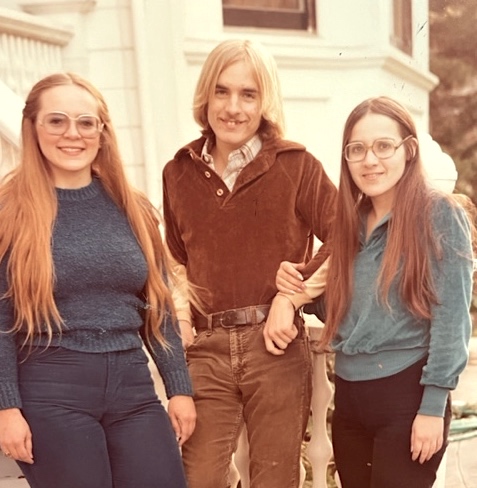
I was doing all that I could for my sister from a distance, since just a year prior to her diagnosis my partner and I—after dividing our time for work between San Francisco and Seattle for nearly 20 years—had finally relocated to the Pacific Northwest full time. So I was on the phone every day with Peggy, encouraging her to be more social, to get exercise, to follow the keto or Mediterranean diet, and to get good sleep. I was doing my best to encourage her to consider assisted living, since pushing her was going to be counter-productive (I know my sister). I was gentle but persistent. I also enlisted our cousin Nikki and our Aunt Betty to help support Peggy while she still lived in our parents’ home, as the situation became more tense with Les.
During this time, Nikki took Peggy to the doctor to monitor her condition, and she was instructed to continue with the Gatorade and yogurt. Of course, this caused Les to seethe.
The sugar issue then led to a huge fight between Les and Nikki, and I got a snotty email from Les telling me that he didn’t sign up to be a caregiver. He said that if I didn’t take care of this “problem” with Peggy, my “negligence” was going to come back to bite me. He essentially absolved himself of all caregiving duties and left it all to me. I was unamused, but since I didn’t yet have another place lined up for Peggy to move to, I played nice. I needed for her to be able to stay at the house safely until I could move her into assisted living, and I also needed for her to be on board with that move. It was a fine line to walk, and stressful to say the least.
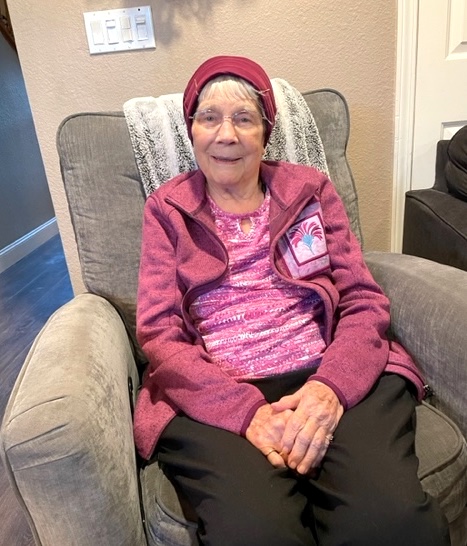
One day, near the end of May, Peggy apparently forgot how to close the refrigerator door. Les freaked out, and I got another snotty email from him titled, “I need immediate replacement.” It was after this incident, I believe, when he realized he was out of his depth. He confessed that he was afraid Peggy would burn the house down. I got it. I was worried too—but it didn’t mean I was going to give up. With Alzheimer’s there is no “immediate replacement” for caregivers.
I told Nikki and Aunt Betty about Les’ threats to walk away from the situation, and learned that he had further told Nikki he was “done” during their argument about Peggy’s diet. We were all a little concerned he might actually refuse to help Peggy in some way, so they volunteered to monitor the situation and make sure she always had simple food available to her just in case. Aunt Betty, in particular, really laid down the law with Les, for which I was grateful.
Most of the food Les kept in the house was unprocessed, which is generally a good thing—unless you have Alzheimer’s. I had stocked Peggy with oatmeal, but then she couldn’t remember how to heat it up. Even the most basic cooking tasks had seemingly become too complicated for her, and quick things like sandwich fixings weren’t available because Les wouldn’t allow bread into the house! It was bad. It was a trying time for everyone.

To make matters worse, apparently Peggy had overheard the fight between Nikki and Les. I’m sure it made her feel really bad about herself, which was really not good for her well-being at all. Later, though, she confided in Nikki that she thought the Mediterranean diet would probably be better for her, which made sense, because doctors often recommend it for good brain health and good health in general. More importantly, though, Peggy also said she was probably ready to move to assisted living! That was my sister: always being practical, even with Alzheimer’s. So ultimately there was a good outcome, even though Peggy had to go through a lot to get there.
After helping Peggy weigh all the pros and cons of the two top choices for assisted living facilities, we decided that the one located right in her old neighborhood in San Jose would be the best choice for her. So Peggy consented to be put on their waiting list, and we looked forward to an apartment there becoming available. In the meantime, I had to do something proactive because I still worried that Les would bail on her. My solution was to hire a home health aide to come for a few days a week and help Peggy out with food prep and socialization.
Hiring home health aides can be a difficult process, and several concerns always crop up. Can they be trusted? Will they show up on time? Will they show up at all? Will they pay attention to the person with dementia or will they be on their phone all day? Will they just quit one day with no notice? In our case, we lucked out big time—or, technically, I made our own good luck.
A few years before Peggy was diagnosed, and as my dad was nearing the end of his life, he needed a lot more care than any of us could manage. I got the name of the woman who had taken care of his best friend. Yolanda knew my dad, and he got along well with her. I met with her in person, and she was wonderful. Unfortunately, my dad passed away literally the day before her first scheduled shift with him. But somehow, miraculously, 3.5 years later, I still had her business card. I wasted no time in calling her. Yolanda was as warm and caring as I remembered. And, as it turned out, her whole family are all caregivers!
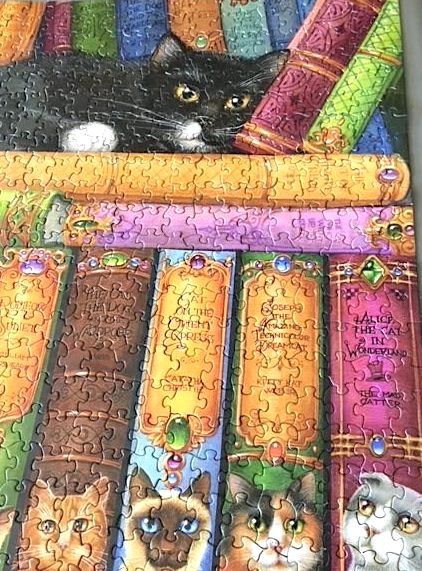
Yolanda had two relatives, both home heath aides, who she thought would work particularly well with my sister. They would each spend a few hours with Peggy on alternate days, seeing to her meals and engaging her in fun little activities like doing a puzzle together or playing a game. Little did I know at the time what a huge difference they’d make in our lives over the next several years. One of them, Liz, would be with us the entire time. I am still grateful to her.