
[TIMELINE: SEPTEMBER–OCTOBER 2019]
By the time late September rolled around, we were ready to attempt the impossible—Peggy’s bucket-list tour of Italy and Sicily. Here are the highlights, and a few lowlights. [For all of the planning and research we did to make this trip happen, please see my travel logistics page.]
Peggy really wanted to go on this trip! Despite her becoming a terrible, nervous flyer a few decades ago (ever since 9/11) and knowing the flight would be lengthy and onerous, my sister had put this adventure at the top of her wish list. That really caught my attention. So even though I was apprehensive of proceeding (and so was my partner, and so was my therapist, and so was everyone we knew), I just had to try to make this happen for her.
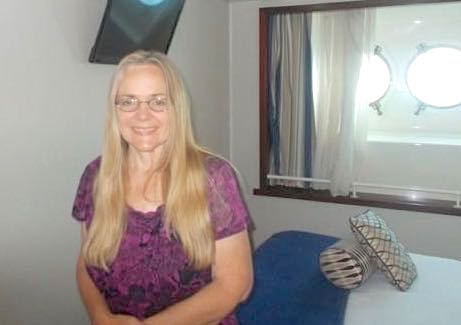
My partner Jon and I diligently worked out all of the logistics that we could imagine. My therapist was skeptical, but she also understood why it was so important to me. We discussed the pros and the many, many, many cons. She suggested that, if I was committed to this trip, perhaps we should consider a cruise. We’re not “cruise people,” but the benefits of a cruise for a person with dementia were clear—the ability to return to the same stateroom every night and create a mini-routine. So Jon and I quickly got on board, so to speak, with the cruise idea.
If I had to do this trip again, I would. In a heartbeat. However, I think it’s important to note that I think we squeaked it in just under the wire. I think if we attempted it even two months later, we wouldn’t have been able to accomplish it at all because Peggy’s deterioration was already on a scarily fast pace. And with the Covid lockdown mere months away (not that we knew that then), we wouldn’t have been able to travel with her by the time everything opened back up. By that time, my sister was already well on her way to memory care.
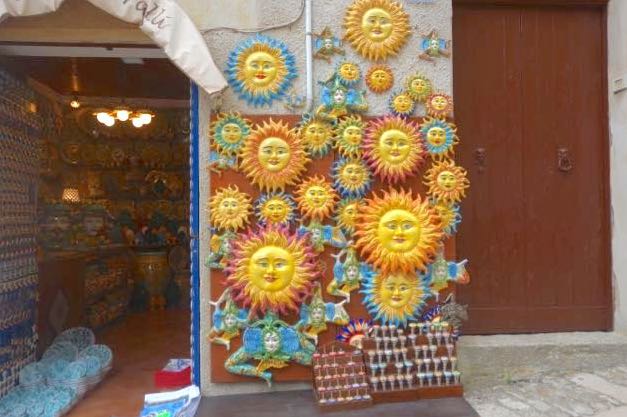
The cruise itself was nice. It wasn’t really a vacation for Jon and me—it was mostly full-time work—but we still got to visit some beautiful cities. We took Peggy on excursions to Erice, Catania, and Trapani in Sicily; Valletta in Malta; and, of course, Rome in Italy. Peggy wanted to go to the Vatican, so we made sure to prioritize that on our itinerary.
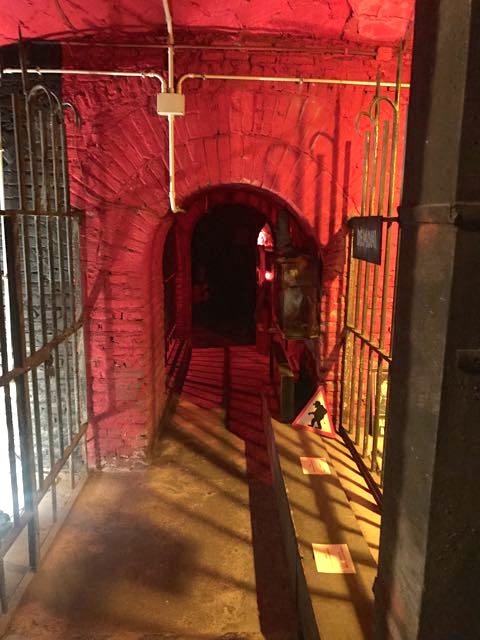
We did manage, once, to steal a few moments for ourselves. One afternoon while Peggy napped, Jon and I slipped out for a quick visit to Dario Argento’s store and museum, Profondo Rosso. As a longtime fan, I wanted to buy every Goblin album in sight, but I had no idea how I’d get that much vinyl safely packed into my suitcase. I settled for books. And, yes, I did descend the famed spiral staircase to see the sights in the basement.
The quieter times on this trip, when we weren’t bustling around with shore excursions, helped Peggy (and us) to recharge. One afternoon, I sat with my sister on the deck of our ship and I started to read Somebody I Used to Know: A Memoir to her. Before I even got to the first page, Peggy said to me, “That’s exactly how it feels. Somebody I used to know.” Peggy described how she felt like her old non-dementia self was somehow distinct from who she was now. It was a new perspective for me, because I’d never heard anyone describe Alzheimer’s or any other dementia like that. But it also gave me some insight into how my sister felt and, hopefully, one more way to understand her and help her make her way through this journey.
I read most of the book out loud to her on that ship. Peggy’s vision was distorted enough by then that she couldn’t read the type in books. She could barely read the large print on boxes and packages of cat food or cat litter, so if I wanted her to hear what Wendy Mitchell had to say about early-onset Alzheimer’s, I had to read it to her. We got through most of the book, and to this day I hope that it helped make Alzheimer’s a little less scary for her.
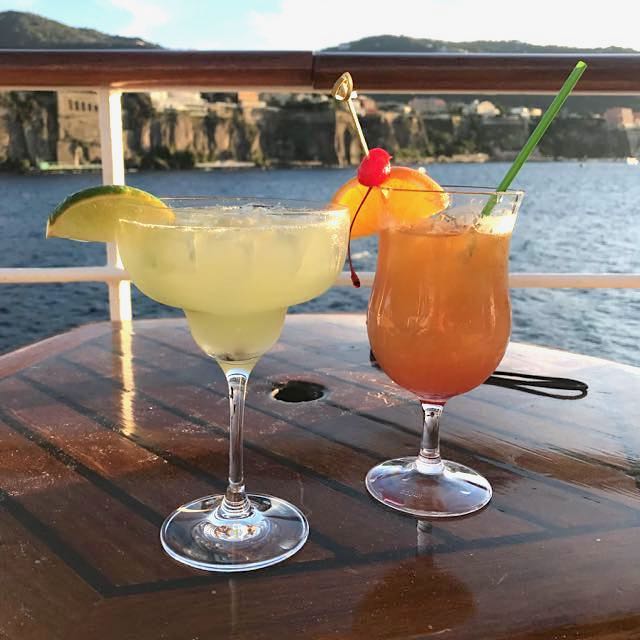
My therapist had been right about the cruise. It was good for Peggy to be able to go to the same stateroom every night, eat in the same dining room every night, and have breakfast up on deck while sitting in the sun. There were a lot of challenging issues, though.
Getting off the ship for excursions was particularly hard. For each city, we always had to consider the basic logistical questions, such as: Can she handle this excursion? How strenuous will it be? Are there restrooms there? Is it crowded?
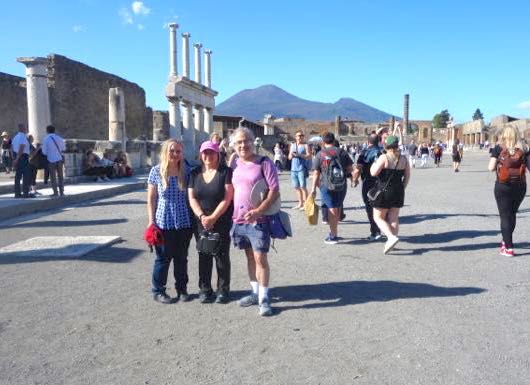
From the ship to the shore, if we weren’t docked right there on dry land, we often had to use a tender, a little shuttle boat that would ferry groups of us back and forth. This was one of the first times that I realized Peggy was experiencing major spatial issues—she really could not sense or feel where her body was in space. She just could not figure out how to climb in and out of the doorway of the tender. She didn’t know where to put her feet, nor did she know where or how to grab onto the metal poles on either side of the door to keep her balanced. We needed two of the crew staff, one on either side of her, to get her on and off the little boat.
The long lines at St. Peter’s at the Vatican were another problem. There were so many people waiting that it kind of reminded me of the lines for rides at Disneyland; we could have easily been forced to stand there for two hours or more if we went ahead with it. I could tell just by looking at her that Peggy was not going to be able to navigate that.
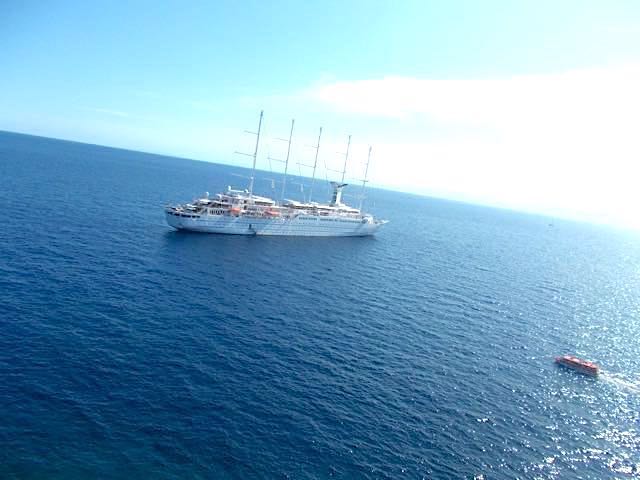
I gently suggested that, since we’d already had a full day exploring Vatican City, perhaps we should get some dinner instead. Peggy was skeptical, and wanted to make sure that we weren’t deprived of the experience of touring inside St. Peter’s. I assured her that we’d already seen inside the basilica before and I also told her that Jon and I were starving. The first thing was true, while the latter was a lie for her benefit. But all she needed to hear was that we were hungry, and St. Peter’s was forgotten. Off we went to go eat tasty Italian food.
It turns out that a little bit of obfuscation—whether a fiblet, a redirection, a compassionate fabrication, or a bald-faced lie—can be critical to deploy in order to influence a loved one with dementia into the safest course of action. I never became 100% comfortable doing this during my sister’s illness, but eventually I became nimble enough at it to serve her needs.
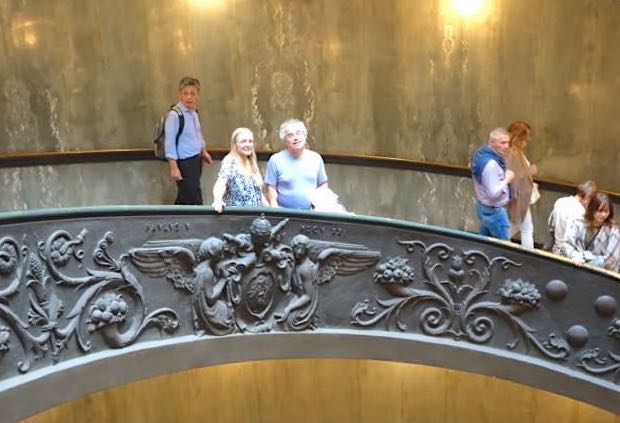
There were some additional challenges we had to deal with during our Vatican visit. First, the elevators were out of service. Normally, going up and down stairs wouldn’t be a problem since Peggy was still fit enough to do this, but her vision was compromised, and the edges of the stairs weren’t as clearly marked as they could have been. So Jon held her by one arm, and I held the other, and together we got her up and down safely.
And we were constantly on the lookout for bathrooms. Incontinence was not yet an issue, but I could see it on the horizon, so getting Peggy to a bathroom as soon as she mentioned she needed to go was a top priority. Thankfully, there were no incidents, just a couple of close calls!
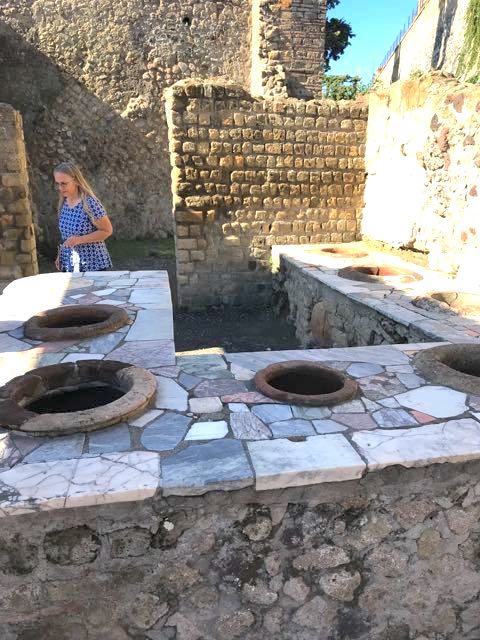
Peggy did have one big emotional meltdown moment. Things had been going so well! But in Malta, somehow she misplaced her camera, and that really triggered her. We hunted high and low for that thing, and thankfully located it. We breathed a sign of relief.
By the time we got back to the states, Jon and I were exhausted. We were more than ready to drop off Peggy at her facility and check into a hotel. A couple of margaritas later and we were out cold, content in the fact that we successfully carried off this seemingly impossible feat.
Despite all the difficulties, Peggy had a fantastic time—and after a couple of weeks at home, she had forgotten all of the challenges. She only remembered how much she loved the trip.