
[TIMELINE: MAY–JULY 2021]
As spring went on, things were going about as well as they could. But in late May, I got a call at 4:15 in the morning. Peggy had fallen, hit her head, and had to be taken to the emergency room. All of the apartments in her assisted living facility have two cords you can pull in case of emergency; one is located in the bathroom, and the other by the bed. Even though she was hurt, Peggy was still together enough that she managed to pull one of the cords.
The ambulance crew filled me in on what had happened: Peggy had hit her head hard enough to bleed and she needed stitches. They said she was fine, just shaken up and embarrassed. I was thankful she was okay, but I worried this was a harbinger of worse incidents to come.
This is life as a caregiver. You see incremental change in your loved one over time, but daily life goes on. Sometimes the changes happen so slowly that you have a chance to acclimate to them, change your expectations, and put plans in place—except when you don’t.
In Peggy’s case, we had gotten used to a new normal, and then she fell. What would the new new normal be now? We didn’t know, but we’d soon find out.

Harbingers were always a preview of things on the horizon, and obviously I had expectations of what those developments were going to be, and none of them were good. It was always just a question of how bad the situations were going to be. However, Peggy’s fall really stood out to me, because I know that as the stages of their disease progresses, a person with dementia (PwD) always gets less and less steady on their feet.
And the fact that her fall happened in the middle of the night was yet another harbinger of bad things. Peggy had been losing her sense of time steadily over the last few months, and I believed that she was now entering the wandering stage of dementia. What was she doing up at 3:30 a.m.? There was no reason for her to be awake—she didn’t need the bathroom, she said, so she was just up. And she couldn’t remember why she awoke, which is a hallmark of this stage.
Some PwDs think it’s time for them to go to work (at a job they retired from years ago) so they get out of bed, get dressed (as well as they are able), and then try to leave their home. Peggy wore a tracker around her ankle so she couldn’t wander outside of the building; if she opened the door, an alarm would sound. But I was relieved that this time she didn’t even get that far.
By mid-day, Peggy was back at her assisted living facility, and thankfully Liz was there. Liz and I talked all day on the phone, sharing information, so I felt that Peggy was in good hands.
A couple of days, later we assessed Peggy again. Physically she was okay, but it was obvious that she had taken a huge cognitive hit. It was dramatic. Usually, when incidents like this happen, a PwD may bounce back for the most part, though they never quite return to their previous baseline. I hoped that Peggy would recover some of her faculties, but this was really hard to see. We kept monitoring her to see how close to baseline she could get.
Peggy got her stitches out on June 3. The whole process went well. I was so happy with Liz and the other caregivers who helped her through that. As soon as I was given the all-clear signal, I gave Peggy a call. She sounded good. There were some actual nouns being used! And this time, I (kinda, sorta) understood most of what she actually said to me.
We were just getting back into this new rhythm in our phone conversations when the situation turned again. I called Peggy as usual to check in, but this time she was really worried about Jezebel. I tried to find out more, but she was really vague and light on details. I couldn’t quite pinpoint why, but her concerns sounded different than the typical existential worrying that she frequently voiced. I didn’t try to redirect her because this sounded more real somehow.
Eventually, I asked her directly if Jezebel was breathing. Peggy said she thought so—and she didn’t sound upset, which I thought was weird. Her favorite cat may or may not be breathing and she’s blasé about it? I wasn’t anywhere near town, so I told her I was going to call our brother Les and have him come by and check in on Jezebel. Peggy was good with that.
When Les got to the scene, he called me to confirm the sad news: Jezebel was dead. We had no idea what happened to her, or how long it had been since she had passed. We guessed it was probably just a few hours earlier, because otherwise the facility’s med techs (who came to Peggy’s room every day) would have already noticed and notified me.
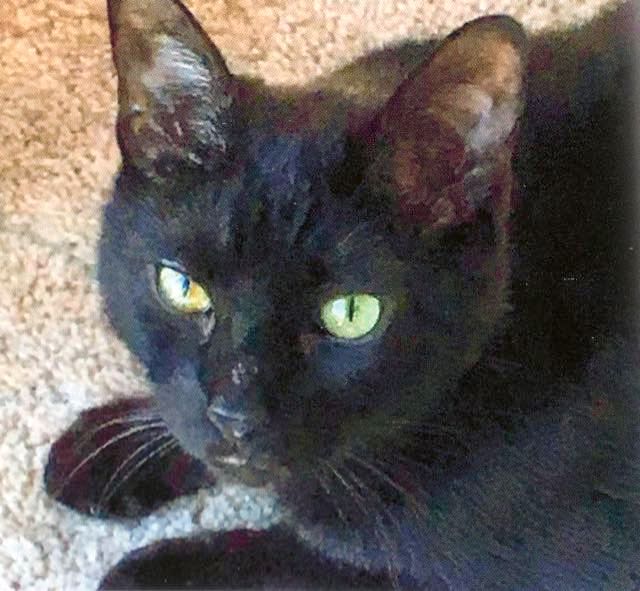
Jezebel had chronic illnesses, but we had managed them for a long time; clearly, something had finally caught up with her. Peggy was beside herself. She wanted Jezebel to be cremated and her ashes returned to her. So with a sense of urgency, I called emergency veterinary hospitals and pet memorial facilities in the area, but most were closed since it was the weekend.
Eventually, I was successful in finding a vet hospital not too far from Peggy who could cremate Jezebel for her. To my relief, Les really came through for Peggy this time. I know driving around San Jose (a busy city about an hour from where Les was living in outer suburbia) was well out of his comfort zone, but he dutifully took Jezebel to be cremated and got through all the paper work.
I was on the phone with Peggy off and on most of that day, saying every comforting thing I could think of. She wasn’t quite inconsolable, but it was close to it. This wasn’t even an Alzheimer’s thing, although the Alzheimer’s surely heightened her emotions. I knew we’d get her through this, but we also knew it was going to be rough for a while.
But as with most things Alzheimer’s, the situation never gets better, only worse. June had been a series of bad weeks in a row, and now with Jezebel’s death, July promised more of the same.
At the beginning of the month, I had a care plan meeting with Maria, the director of Resident Services. She was concerned because Peggy had gained weight, she was sleeping more, and she wasn’t as active as she has been previously. She would also tilt to one side when she sat down. As far as I could tell, this was FTD speaking to us—probably something to do with Peggy’s balance. Maybe she needed a change to her medications?
We decided to try to make Peggy’s room more accessible for her, and we started with her wardrobe. We needed to get rid of the excess clothes in Peggy’s closet. It was a strange experience. At one point, I stood just to the side of her, just outside of her peripheral vision—and she thought I’d left the room! It was so weird, because I was standing just a foot or so away from her. If she had turned her head even a little bit, she would have seen me.

The process itself of going through her clothes was difficult too. She couldn’t see the articles of clothing I held up until I had them right in front of her face, and waved them a bit so that she’d catch the movement. She was so unfocused. What was even weirder is that she didn’t seem upset about it at all; in fact, it seemed like she was unaware that there was a problem.
My therapist explained later that this sort of disconnect happens often with PwDs because they begin to zone out at this stage of their disease. That’s exactly how it seemed.
So it took forever, but the two of us got through her entire closet. My hope was that Peggy would now be able to better see all the outfits she had available to choose from, after we had pruned away a lot of the excess pieces. She still had quite a few of her favorite clothes left.