
[TIMELINE: February–March 2024]
I spent most of the month of February visiting my sister, because I knew it wasn’t going to be long at that point. Even though she was sleeping a lot more, we tried to make her waking moments as pleasant for her as we could, and there was still plenty of problem-solving to be done.
Aruna, the hospice nurse on duty, confirmed that Peggy’s condition remained “unchanged,” and she continued to eat and drink very little. She couldn’t survive on so few nutrients, so we looked for more ways to ways to entice her. But Peggy now had trouble remembering how to chew solid food—and she rejected puréed food entirely—so her diet consisted mostly of protein shakes.
Michael came up with a brilliant idea, though. He borrowed a blender from his brother and puréed the spaghetti sauce we had made together from my family’s recipe. What a fantastic idea! Now the tiny meatballs and sausage pieces we had originally included could be smoothly blended into the sauce, so the texture wouldn’t be strange to Peggy. My fingers were crossed.
Peggy’s hospice team continued to be a rock for us. I was really grateful for each of them. Stan, her case manager, began upping the frequency of his visits this month, and so did Brian, the hospice chaplain. When I first met Brian, he had quizzed me extensively about Peggy’s musical tastes. Then when he visited her room, he would always play music for her that he knew she really liked, such as ’80s. One time he even cued up the soundtrack of Paint Your Wagon, which was a treat for Peggy since she had sung in a junior college production of that show! She perked up immediately when she heard it. It was so thoughtful of him, and I really appreciated it.
I think keeping Peggy’s favorite music playing whenever she was awake was one of the most important things any of us could do for her during those days (apart from convincing her to eat more). Since music had always been one of the most important things in her life, it made perfect sense that she still enjoyed listening to her favorite songs despite her dementia.
Even when she was pretty out of it, I know music brought her comfort. One day in mid-February, I was sitting with Peggy while she lay in bed. We were tuned into one of iHeart Radio’s numerous ’80s stations—but instead of humming along to the songs like she usually did, Peggy hallucinated the whole time. So that was a little strange. For once, though, it seemed like they were good hallucinations! At one point Peggy even whispered “wow” in a kind of awestruck voice. But she spent a lot of time ignoring me in favor of staring at something very interesting on the ceiling.
The next day, my sister’s friend Janelle came by again to see her. Together we played more ’80s music for Peggy, and this time I believe she experienced no hallucinations at all. Instead, she seemed to be listening more closely to the radio, and occasionally was able to sing (or at least hum) along with some of the songs that were more familiar to her. That was nice to see.
Peggy also laughed along with Janelle as she chatted and joked. While we were there, Aster, one of the memory care staffers, popped in to say hello, and told us that Peggy had drunk a bit of cranberry juice and protein shake so far that day, but eaten no food. Which wasn’t great news, but not a big surprise. Still, I appreciated how closely Aster had been monitoring my sister, and how much she obviously cared about her wellbeing. Aster was so good with Peggy!
Later on that same afternoon, a priest visited to administer last rights. I really wasn’t sure if Peggy cared. She probably didn’t, but I had arranged it for her just in case. So that was a wild day—last rights in the afternoon, laughter and new wave music in the morning. I just had to roll with it.
Thankfully, Peggy stayed with us several more weeks, and she experienced some nice moments during that time. She (and I) saw a lot of Janelle and Michael over these weeks, and the frequency of visits by other friends and relatives, including our cousin Nikki, increased, too.
Our brother Les had also started to come by a little more often, which was good. He always called Aunt Betty whenever he came to memory care, so he could try to connect her with Peggy.
I was present during one such visit with Les, and Peggy was very responsive that day. When Aunt Betty greeted her, Peggy smiled and whispered “hello” back to her, clear as anything. A couple more times during that same phone call, Aunt Betty addressed her directly and each time Peggy gave a clear (though slight) response that mattered. She would open her eyes a tiny bit, smile, and say something brief but appropriate to the conversation (hello, goodbye, etc). That call took a lot out of her, though, because as soon as Les hung up the phone, Peggy was deeply asleep.
Her energy levels were becoming very limited (and unpredictable), so we just had to work around that. Peggy’s posture also worsened throughout the month. Since January, she had been having trouble sitting up independently and holding her head up straight; these were characteristic of mid-Stage 7 dementia. Now, her drooped head position was more pronounced, and it made eating and drinking even more difficult for her. Very soon, she wouldn’t be able to hold her head up at all.
Just a few days later, near the end of February, I witnessed this expected decline in person. Upon my return to the Bay Area, Peggy could no longer hold her head up when sitting in her wheelchair.
By the time I arrived, Peggy hadn’t eaten solid food in more than a week, and she was only drinking tiny amounts of liquid. But lucky for us, Janelle—a.k.a. the Peggy Whisperer—got involved. She kept encouraging Peggy to drink more, and Peggy responded well to her. It helped!
One morning, Janelle even convinced Peggy to drink nearly a whole container of Boost! Yay! I’m not sure how she accomplished that, but I’m so glad she did. Janelle is an amazing woman! And due to Janelle’s ongoing efforts, Peggy drank a small amount of Boost every morning she visited.
I relished tiny wins like this, even though my sister’s condition deteriorated further every day. For example, I noticed that Peggy would become so sleepy that she would usually be out cold by the afternoons—but she could be quite alert in the mornings. That was something, right?
And there was one day when I became alarmed at Peggy’s skin tone, because her coloring was the worst I’d ever seen it, truly an ashen pallor. Yet in spite of that, the quality of her skin was quite good, with no visible damage or sores. Her vitals were also steady. More wins? Maybe.
Honestly, I wasn’t convinced that any of this “good stuff” really mattered anymore, but we couldn’t help but grab onto any positives like these that we could. That was how we kept going.
However, the progression of Peggy’s dementia also kept going—and it was relentless. During these last few days of February, Peggy started to refuse liquids, and I got the nagging sense that she was beginning to forget how to swallow. When she no longer remembered how to do it at all, I knew that’s when we needed to consider giving her morphine and Ativan together, for pain and anxiety. So we kept a watchful eye out for that. We weren’t quite there yet, but we were close.
Already, Peggy could barely speak—and her memory had taken a nosedive, too. While she still recognized me and Janelle, suddenly her best friend Michael and my partner Jon were strangers to her. Even Sonia, who had been my sister’s favorite caregiver (and personal Game of Thrones hair stylist), told me Peggy had forgotten her. Sonia was so upset about it, and I didn’t blame her.
There was just so much sadness, for all of us—with a side of hypervigilance, perhaps.
That’s because around this time, Liz and Desiree (the private caregivers I hired for Peggy) told me a fundamental hospice truth: Once Peggy’s breathing became shallow, and stayed that way, the end was near. Already, it had happened occasionally—so we kept a watchful eye out for that, too.
After visiting with Peggy in memory care for almost a week, Jon and I needed to return to Washington for a few days, so we left Peggy in the capable care of Liz, Desiree, and her hospice team. Unfortunately, no sooner had we arrived home and settled in, hospice called us and recommended that we return as soon as possible. Peggy was transitioning.

We made our flight arrangements immediately—but because this was the one time we really, really needed to be there as quickly as we could, of course it snowed. So our flight was delayed, and then it got delayed again. “Stressed” does not even begin to describe how I felt. By the time we finally landed back in the Bay Area, it was almost 2 a.m. and the rental car place was closed. Sigh. We could reach the car we booked, but couldn’t drive it off the lot.
It was beyond frustrating, but at least we were in town. We took a cab to our hotel, slept for a couple of hours, and then I caught a ride to memory care while Jon went back to the airport and picked up the rental car. I was glad that I had made it to Peggy’s bedside before it was too late.
We didn’t know how long she had left. Monette, the hospice nurse on duty, told me that Peggy could last another two weeks, but I could tell that time frame was mostly just theoretical. Monette also said members of the hospice team would be with Peggy every day from now on, so I was pretty sure we were looking at just a few days at most. It was March 5.
As well as various members of the hospice team and memory care staff, Peggy’s room that day was filled with people who cared deeply for her: Desiree, Michael, Janelle, Les, Jon, and me.
As I got into Peggy’s room, two distinct thoughts popped into my head. The first is that I noticed Peggy’s hair looked great, and she was dressed nicely, too. Whoever had woken and groomed her that morning had taken a lot of extra care with her, and she looked pretty peaceful resting under our Aunt Betty’s cheerful purple quilt. My second thought? This entire situation sucked!
Hospice nurse Monette then filled me in on the details of my sister’s current condition. Peggy’s heart rate was really high (140 beats per minute), but her pulse rate was weak, almost undetectable. Her breathing was fast and shallow, just as Liz and Desiree said would happen.
They had been giving her oxygen and atropine (to ease her breathing and prevent it from rattling in her chest), and they had just started morphine. That’s probably why her eyes weren’t open much, and the rare times they were, I could tell that she wasn’t really focusing on anything.
At this time, Peggy’s skin was starting to discolor due to her slowing circulation, which I could see from her bedside (although her color improved a bit later due to the oxygen she had received). Peggy also had become quite overheated that day, so hospice had turned on the air conditioner, even though outside it was barely 50 degrees, Monette said. Apparently, Peggy’s skin had actually been cool to the touch the day before. So everything was in flux.
Monette also explained to me more about what we were seeing during Peggy’s transition from life to death, and how long the process might take. Would it be a day? A couple of days? Since Peggy wasn’t eating, it would be sooner rather than later, she said, noting that Peggy hadn’t ingested anything at all for two days now, neither puréed food or liquids. The important thing was that hospice would be there until Peggy passed away, she assured me. I was glad for that.
Monette was exceptionally kind as she talked through everything with me, and I knew that she understood that everyone else in the room was in pain, too.
Meanwhile, some of the staff caregivers who had been closest to Peggy came to her room to say their good-byes. Aster was beside herself. That afternoon, a troop of med techs came in to tell me how much they’ll miss Peggy, and they shared some stories with me.
I finally met Lily, the young caregiver who Peggy mistook for me once. If I squinted really hard, I could see how Peggy might confuse us—if I were 22 years old again! Lily told me something lovely: She had originally been a staffer on the assisted living side of the facility, but when Peggy moved to memory care, she had moved into that department, too, in order to help take care of her.
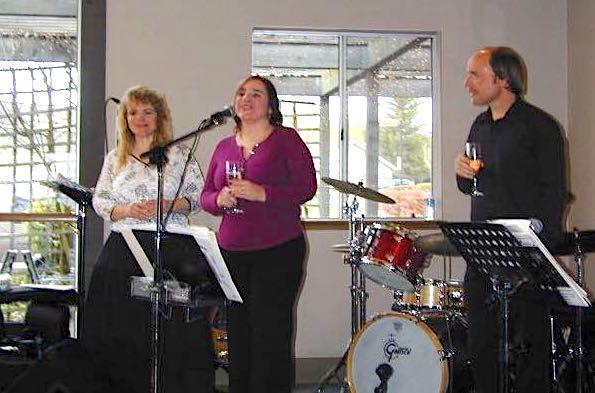
Aster also had many nice things to say to me; for one, she told me that Peggy was like a sister to her, and I believed her. She was amazing during Peggy’s final days, always hovering and helping.
Clearly so many of these people really cared about my sister, and that made me happy, even at such a sad time. Peggy was never alone that final week of her life. She was well-loved, and the level of care she received reflected that. I realized that this love was probably why she had never been kicked out of memory care; no matter how disruptive she got, she never lost her placement.
I think everyone remembered her from assisted living—and her cheery, helpful personality—so they cut her a few breaks. Not only that, but I’m proud to say Team Peggy was always responsive when memory care needed for us to do something. We were all very present for Peggy’s care.
The following day, March 6, Peggy passed away around 11 a.m. So many of us were present: Michael, Janelle, Les, Jon, and me again, along with Sonia, and Aster. As word got out, other staffers came by, like caregivers Venus and Gina; Brandee, the memory care director; and Shantela, the CEO of the facility. Not long after, Stan arrived, Peggy’s hospice case manager.
It was peaceful and quiet, and even though I was really sad, I was glad that she wasn’t stuck in Stage 7f, the final stage of dementia that can persist for months or even years. It’s a frightening possibility that could have really happened—in fact, several caregivers on the AlzConnected forum have experienced that exact scenario with their loved ones. So in that regard, Peggy was lucky.
Once Stan checked Peggy’s vitals, he noted the time of death. Then we all waited with Peggy until someone came to pick her up to take her to Hollister, where we would inter her ashes alongside our favorite Aunt Rosie, and host her memorial service in another month or two. We all stood around not saying much of anything; I think we were all feeling the same thing, just a deep pain.
Peggy looked so small, smaller than we were both in high school. Within ten minutes, her skin changed noticeably. She looked paler, and she was developing bruising around her eyes. Even though they were fresh, the bruises looked like she had had them for several days.
At that moment, I needed a breather, so I walked out into the memory care living room, and ran into Ester, one of the residents. We both looked out the window and spotted the mortician’s car that had arrived to take Peggy to Hollister. Ester said (in Spanish) that someone must have died; I agreed, and left it at that, as my Spanish isn’t that great. I didn’t know if she actually knew Peggy’s name, even though they talked—and just in case she did, I didn’t want to upset her.
Then there was nothing left for me to do but call family and the friends who weren’t in the room with us, to let them know. So we departed for Michael’s. We were quiet and somber.