
[TIMELINE: April–September 2024]
April 2024
Following my sister’s memorial service, and once we had been back home for a few days, I finally took some time to begin processing everything that had happened over the past five and a half years. Honestly, I had no regrets. I knew that I had always been careful to consider everything I did for Peggy before I did it, and review every decision on her behalf before I made it.
In hindsight, I think that was a wise strategy. That way, I always made sure I was giving all I could to Peggy. I knew I wasn’t an expert on Alzheimer’s, dementia, or caregiving, so I leaned on my strengths in other areas—like research, love for my sister, and commitment to her wellbeing. In those ways, I know l always did the best I could for her given the resources I had.
However, I did have some vague feelings of disappointment—not really aimed at any one person, but more for the situation around Peggy as her disease progressed. I could not help but go over and over it in my mind, thinking about the people who weren’t there for Peggy when it mattered.
Thankfully, I have a wonderful therapist, Katy, who offered some great advice about this. She said that it’s okay (even expected) to feel disappointed, but don’t hold onto that feeling. Just “process it and give grace where you can,” she told me. And so I did that as much as I was able.
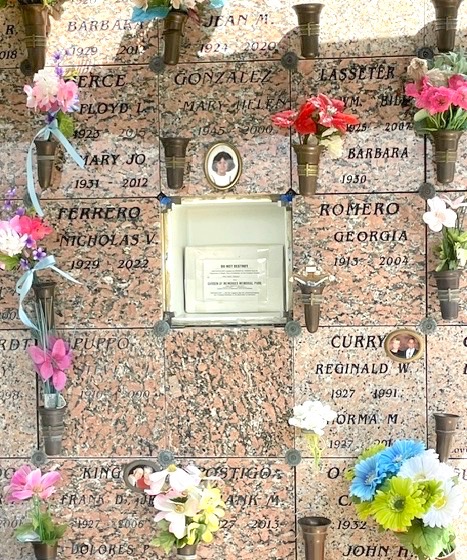
In addition to my reflections, I also took time this month to visit with family. It was nice to spend some relaxing moments together—and it also gave us a chance to fondly talk about Peggy.
During one such get together, we were at our cousin’s house, and something really wild popped into the conversation. Apparently, some months (or maybe even years) ago, Peggy had told some of our cousins that her friend Tahoe died, which is even worse erroneous news than she had told me, when she said Tahoe had been diagnosed with Alzheimer’s just as she had.
I was delighted to share the happy news with everyone in the family that, not only was Tahoe very much alive and I had spoken to her recently, but she wasn’t sick at all. They were incredulous! “Tahoe’s alive?” they exclaimed “And she doesn’t have Alzheimer’s?” Peggy, the unreliable narrator, strikes again! So even though we were all still sad and we really missed Peggy, she gave us all a big laugh, an honest-to-goodness belly laugh. And we were grateful for it.
In that moment, my heart felt a tiny bit lighter. And that feeling has continued to expand, incrementally, all the way up to today. If I had to name a cause for it, I would say there are many.
One part of it is knowing that I did my best, and knowing that Peggy knew I did my best—at least, she did when she was still lucid, a bit earlier in her illness. That knowledge lifts a huge weight off me. Another part of it is the fact that I no longer need to be responsible for every aspect of my sister’s life, nor do I need to worry anymore that I’m doing the right thing.

And—real talk, here—another part of this lightness I’m now feeling is due to pettiness. I am thrilled that I no longer have to try to appease our brother Les so that he’ll come through with whatever we need to improve Peggy’s life. He never saw eye to eye with me on Peggy’s care, and he had been a major source of stress for me the entire time I cared for her. Now, I no longer need to play nice with Les. In fact, I no longer need to play at all anymore! It’s a huge relief.
At first, I especially appreciated it when I reached this new reality, where I could just take some time and actually catch my breath. But then I wondered what to do next. Obviously, I still had a few more decisions to make. Yes, I needed to settle Peggy’s estate (and I eventually I did that)—but afterwards, then what? I knew I wanted to give back to my community of caregivers, who had supported me when I most needed it, but I wasn’t sure, exactly, what that would that look like.
September 2024
It took about six months for me to figure it out. By September, I decided what a big part of my giving back looks like: this blog. It represents my personal experience of Peggy’s life with Alzheimer’s and frontotemporal demential (FTD), and in many ways her experience as well, as best as I can tell it. It’s the story of our journey together. What we experienced won’t be 100% universal to all caregivers and their loved ones, but hopefully what I’ve shared here can still be a roadmap for anyone who may have to navigate a similar situation with someone they care about.
If you’re already in that caregiver role and you’re reading this, please know that you probably won’t go through everything that we went through, of course. Since there are so many variations of these diseases and what symptoms they present, one can never predict how it will go. And you’ll likely go through some other things from which Peggy and I were spared. But at least you’ll have a notion of the general trajectory of how it all could progress, and be better able to prepare for it.
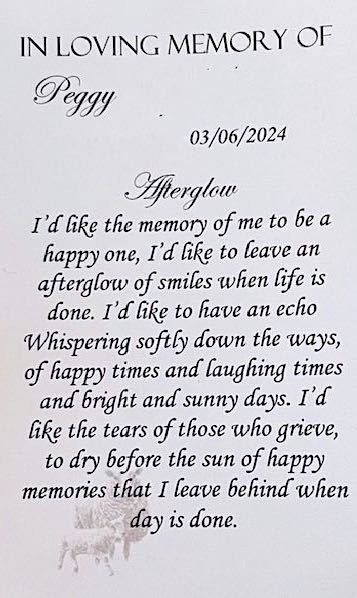
If you’re just starting out, I hope this blog helps you navigate some aspects of dementia. Please take a look at the resource page; if it’s listed there, it’s because I used it, and found it helpful. I’ll also be posting some additional hints and information here, which I hope is useful to you, too.
If you’re somewhere in the middle of this journey, I hope you’ll be able to see that none of this is your fault (or the fault of your loved one), and that you’re doing the best you can with what you have. Please, give yourself as much space and grace as you can.
And if you are near the end of this journey, an important piece of advice I want to share is: Make sure your care has a proper conclusion. Tie up everything, legally, as soon as you can.
And then, take time to reflect on what you’ve been through. It’s only been now, with a lot of distance from where I was when my sister died, that I can see the bigger picture. Now, I’m more objective about what happened. Now, I can admit that, during the years of my sister’s illness, I was always faced with terrible choices—bad ones and worse ones.
I can see now that Peggy’s condition never really plateaued, even though I sometimes thought (or wished) that it had. In reality, she was always sliding further downwards, whether I chose to believe it or not. I don’t know if that’s the case with everyone, but that’s how it was with her.
I can look back now and be proud of my better moments—reading everything on Alzheimer’s and FTD that I could get my hands on so I was as prepared as I could be, joining the Alzconnected forum to talk to others who were in similar situations as I was, and finding a therapist.
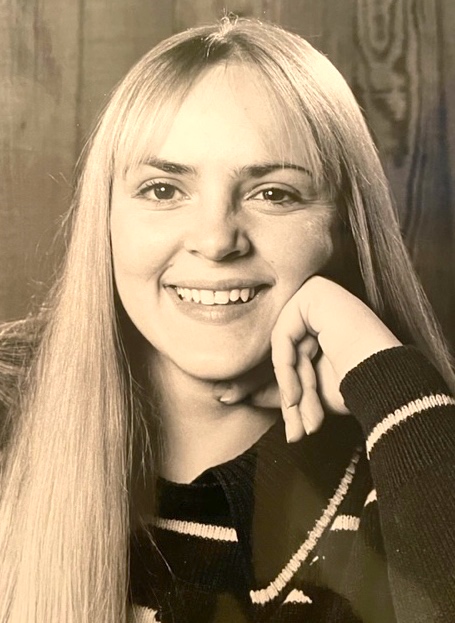
I can also see my worst moments, like when I switched out face masks without thinking, which confused and upset Peggy, or my reluctance to call in the hospice team earlier than I did. Maybe I should have more closely monitored the care of my sister’s beloved cats, Chloe and Jezebel, rather than trusting Peggy’s word that she was capable? And should I have downright banned Les from seeing Peggy in memory care? I still go back and forth on that one, but I usually come down on the side on what I actually did, which was to permit him (and encourage him) to visit her.
I still think my proudest achievement is that I never yelled at Peggy, not ever. I never even raised my voice to her, no matter how frustrated I got. I knew she tried her best, and she always told me that, too. And if she was anything like Greg O’Brien, author of On Pluto, trying to hold it all together must have been exhausting for her. I always knew that she wasn’t being irritating or irrational on purpose; it was always the Alzheimer’s and the dementia. It was never her fault.
In truth, I think I was only able to summon so much of this sort of patience with my sister because I prioritized self-care. So I want to remind you to do the same. Believe it or not, a not insignificant percentage of caregivers die before their person with dementia (PwD) does. Do what you can to not become one of them. Go to the doctor, the optometrist, the dentist. Go to the gym. Eat well.
And find joy with your PwD wherever you can, even if that’s during the briefest of activities, or in the smallest moments. In my case, I had a blast dancing with Peggy in our chairs to Prince songs, singing along with her to Duran Duran, and laughing at our Dad’s jokes and the snippets of bad TV shows from our childhood that she could remember.
I hated this whole journey, and I’m pretty sure Peggy hated it more. But I did have some kind of satisfaction at the end: I got her through it. If this is something you choose to (or are forced to) embark on, now you know what you’re up against. It’s hard and it’s not pretty. But you can do it.
I feel that the love, caring, and respect that you and Peggy shared, made this successful transition possible. I’m so sorry that it happened, and know that it was unrelentingly hard, but If I had been Peggy, I wouldn’t have wanted anyone else in my corner. You were a bright light for her, along with Michael, and her other friends, and I am so grateful. I was never going to be fun, but you all made it so, so much more tolerable for her. Thank you for sharing all of this, and for being the BEST bib sister. The inside view that you gave to us, of Peggy’s positivity, her cherry outlook, her passions, and her skills…well, it was just wonderful to read and get to know her in a more 3-dimetional way. I have valued this blog, very much. I will always have that erlenmeyer flask that Peggy gifted to me, and I will think of that wonderful lady, and the fun that we had, whenever I use it (and I do!) And I will think about YOU, and how gave her so much, and I hope that you are giving all of that energy to YOURSELF, now. I love you. You did a great job. You deserve the best. And let me know if I can help you to give that best to yourself :).
La Brea 2028, baby!! 😉