
[TIMELINE: April 2023]
Hell Day, a.k.a. April 18, had actually started out so well, at least for me. I had gone to the gym, completed a great workout, and was driving home. Two blocks away from my house, however, staff at my sister’s memory care facility called me, frantic. This was bad. I pulled into the parking lot of a nearby park, waited for them to put Peggy on the line, and braced myself for fallout.
Peggy was absolutely inconsolable and very, very, very angry—angrier than I or her best friend Michael had ever witnessed for any sustained period of time. She ranted and ranted at me while I desperately tried to follow along with what she was saying. She told me that she didn’t like her hair. She didn’t like the clothes she was wearing. She said people were being mean to her. And, worst of all, she insisted that there some guy (that I guessed was another hallucination) who was up in her space even though she kept telling him to go away. Yikes!
After about 15 or so minutes of me trying my best to calm Peggy and failing miserably, I tried another tactic. I needed to do some more investigating, to suss out the facts. So I ended the call with Peggy, then got Rebecca, the memory care activity coordinator, on the line instead.
Rebecca confirmed my suspicions that Peggy was, indeed, hallucinating that day—there was no one near Peggy at all as we were speaking, and there hadn’t been earlier, either. So that wasn’t great. But Rebecca had some ideas. She first suggested taking Peggy for a walk outside; perhaps a change in scenery might break the loop? That sounded smart, I thought, so I agreed to the plan immediately, and asked Rebecca to call me back if she needed me.

To my great relief, Rebecca called me back around 4:30 p.m. with somewhat good news: Peggy was a bit better, relatively speaking. Rebecca had taken her and a couple of the other residents out for a short walk around the beautiful grounds of the Carlton, before circling everyone back inside to memory care. Thankfully, that seemed to have done the trick. “Since the walk, [Peggy] has not had any behavior expressions of anger,” Rebecca assured me, noting that Peggy also had become calm enough to spend a little time indoors around some of the other residents. Then she ate dinner in her room, while listening to one of her favorite ’80s girl bands on CD.
That was all reassuring to hear—but my hopes that my sister’s moods were beginning to balance out would prove to be folly once I spoke to Michael the next day. He shared with me his direct observations on what had gone down with Peggy, as he had been present for most of it. Ugh.
“Yesterday morning was miserable for both of us,” he said. “In a nutshell (my opinion only), she was imagining a woman the entire time I was there and having a consistent argument with her.”
So Peggy had been hallucinating two imaginary people the day before? What a nightmare! Michael said he had queried Peggy more in the hopes that she would reveal details about who (and what) she was seeing, but it didn’t really work. “I tried to discover who it was,” he said, “and I only got the usual ‘you know, I have told you before’ etc.”
Given Peggy’s stormy mood when he arrived, Michael thought it would be best for them to stay in her room, away from others, during his visit. “I played the first CD ‘mixtape’ the whole way through before lunch,” he said. “She spoke nonsense to me all morning and argued with this woman the rest of the time. Any distractions I tried were not working.”

And not only had Peggy been crying and yelling continuously at an imaginary woman while he was there, Michael said, she was also seemingly “fighting” with herself, which was a disturbing new development. Here’s how Michael described it to me:
Sitting in her chair, she would grab her left hand with her right and pull at it really hard—like a parent was dragging a small child away from the play yard if it was late and past time to go. She did it several times and I had to pull her hands apart to get her to stop.
Michael also said Peggy’s legs had been shaking, and she was so wound up she wouldn’t even finish eating. So he stayed with her as long as he could before heading home. Later, he was still so stressed out by the experience that he busied himself with yard work in order to decompress.
I felt so bad for Michael that he had to go through all that, but also grateful that my sister had such a caring friend in him, that he would stay with her during a period of so much emotional turmoil.
But Michael had even more bad news for me. Even before the previous morning’s drama, Peggy had been experiencing flashes of these new, alarming difficulties, he said. Earlier in the week, he had attempted to have lunch with Peggy in the cozy TV area of the dining room. She became very unsettled by any noise or activity from people in their vicinity, and had resorted to shouting a bit.
“I tried to tell her it was just the staff nearby, that no one would bother or hurt her, that it was just her and I having lunch,” Michael said. “She gave me some looks that you could have poured on a waffle!” His efforts to soothe her were unsuccessful. “It was a struggle to get her to eat or drink anything,” he said. “She was crying, yelling…and blaming the woman.”

Afterwards, Peggy “would not finish lunch, which she always does,” Michael said. “I got her back to her room, where I hoped she would calm down without any other people around.”
It seems that this was the very first time any of us had witnessed Peggy hallucinating this particular imaginary woman—and obviously it was far from the last, as just a day or two later, she would be arguing with the same imaginary woman for hours in her room. (The Lady, as we called her, ultimately became a recurring, and mysterious, hallucination for Peggy in the coming months.)
So Hell Day, as I now think of it, marked for me a major escalation of some of the scariest of my sister’s dementia-related conditions. It was the day I realized her hallucinations and delusions were about to become a much bigger problem for her (and for the rest of Team Peggy).
And I know during this time that I was feeling very powerless, and I didn’t like it. A gut impulse came over me: I just wanted to run away. Of course I wouldn’t really do that, but oh how I wanted to. I also remember thinking that Peggy was really lucky Michael always had her back—and mine.
In the coming days, Peggy’s situation continued to fluctuate. April 19 was a much better day for her; memory care staff confirmed that her mood was much improved, and she was only a little triggered by the “crowds” of other staff and residents nearby (probably only half a dozen people).
And I got some answers about Peggy’s leg shaking. One member (a doctor) of the ALZConnected forum suggested that it was likely part of the Parkinson’s-like symptoms my sister had already been exhibiting. That made total sense to me, and I updated Michael to that possibility.

By the weekend, however, Peggy’s situation was again chaotic. Michael was back to visit her, and he and Peggy returned to the TV area of the dining room for lunch. Things were going fairly well with minimal drama—until a resident that Peggy did not like got a little too close to her.
“Staff had wheeled him to sit behind us for a moment on the way to bringing people back into the living room,” Michael said. And then, out of the blue, “She literally told me that he had just hit her,” he said. “I told her that no one had touched her, and that I was sitting right next to her.”
So that was not good. Michael said he tried again to set Peggy straight, although it killed the cheerful vibe they had established. “I automatically disagreed, and tried to explain how it was not possible,” he said. “She would have none of that—and I got the silent, pouty face for a while.”
Apparently, Peggy had begun imagining a lot of things that weren’t at all happening, and Michael had been bearing the brunt of that since he visited her so often. It dawned on me that I had been trying to convince myself that Peggy had been on a plateau with her symptoms, but in hindsight, I now understand that there never was a plateau. She had never been stable.
At the beginning, I once thought symptoms could sometimes hit a plateau or status quo for a good while. But I was wrong in Peggy’s case. Her condition had always been a slide down—sometimes it was a total cliff dive, and sometimes it was a gentle slide down the mountain. But there was always, always a downward progression. And there was nothing any of us could do about it.
All we could really do for Peggy at this point was to try to eliminate as many of the things in her environment that agitated her or caused distress, and find more things to boost her mood.

So that meant, first of all, whoever was with her at mealtimes had to remain flexible. Peggy was still doing well with finger foods, so our main focus was making sure she didn’t feel surrounded by too many people while she ate. So sometimes she dined alone, and sometimes with people she trusted. Sometimes she sat in her room and listened to music, and other times she would tuck herself away in a quiet corner of the memory care reception area. Whatever worked!
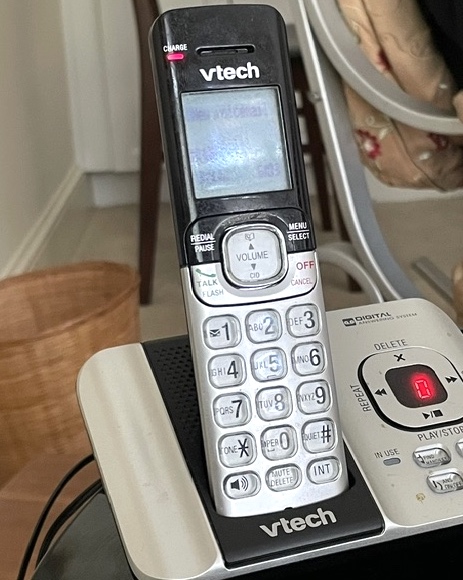
Another area of concern was the phone. In previous months, Peggy had been taking (and making) calls on a memory care landline phone located in a supply-closet-turned-office space. But when she started confusing that office for her own room—and getting agitated other people occasionally were in there—we made a change. We brought back her old iPhone in an industrial-strength case so that if she threw it across the room it wouldn’t break. We took off all the apps, including the internet, so it was locked down. And we gave memory care physical control of it, so a member of the staff would answer it when we called Peggy, and bring the phone directly to her.
Small changes like these were important to my sister’s daily wellbeing, so everyone on Team Peggy was on the lookout constantly to see what might need to be tweaked or improved. Our goal was always better moods for Peggy, less anger, and fewer emotional meltdowns or outbursts.
But we couldn’t control everything. For example, my pleas to our brother Les at Uncle Nick’s funeral the previous month had not produced the results I had hoped. It turned out that he had not visited Peggy yet, even after we discussed the issue at length. Sigh. I was glad I had a session with my therapist Katy lined up for April 27, because I really needed to vent about that.
On the upside, Peggy enjoyed a few really good days towards the end of April, especially with the little modifications we had been making to her surroundings and to her routines. I was so happy for her! She was pretty cheery when I next spoke to her on the phone, just really happy about seeing Michael and spending time with him during his latest visit. It was a good surprise for once!
Also that week, Peggy was finally able to hear her favorite Fleetwood Mac album, Rumours, on CD in her memory care room, after I converted it from her vinyl collection and sent it to Michael. Peggy was thrilled about it, Michael said, adding, “Rumours has helped her so much!” She had also been treated to some more Game of Thrones hairdos (fancy braids) courtesy of caregiver Sonia. So Peggy was back in Memory Care Barbie mode, and Michael loved seeing that again.
Peggy still seemed quite confused about everything, but generally good-natured about it. (Which reminded me of the old Peggy, who always found the positive in any situation.) How confused was she? Well, at one point in our conversation, we shared an exchange that went like this:
Peggy: Are our parents dead?
Me: Yes.
Peggy: Oh! I didn’t know!
Peggy: Have you and Les passed away too?
Me: No! I’m right here!
Peggy: Okay. I just wanted to make sure no one else had died.
I was initially quite fearful as I answered with that first yes, because I didn’t want to make her emotional or sad or angry, but Peggy wasn’t upset at the revelation at all, just surprised. And when I told her I was “right here,” I laughed, as a cue for her to maybe laugh as well…and then she did! It was such a weird conversation, but it turned out to be a positive one.
And in Peggy’s mind, it was a reasonable series of questions. She just wanted to verify that her siblings were still alive—and the fact that she was already talking to me on the phone didn’t seem to register at all. So somehow the entire conversation went well, and I called it an unequivocal win. Then I transcribed it and emailed it out to other members of Team Peggy!
“Wins” for us now had a low bar, but that was okay. We knew the days ahead were going to be dark, so it made sense to look for even tiny reasons to celebrate, however we found them.