
[TIMELINE: JULY–AUGUST 2021]
July 2021 was a long, long month. On top of everything going on with Peggy, I ran into another unnecessary hurdle trying to deal with her Kaiser healthcare portal. I never logged into Peggy’s actual account because they have strict rules against that. Instead, they gave me my own caregiver account that was connected to Peggy’s and shared her information. It usually worked pretty well, but on this day, when I tried to send a message to Peggy’s doctor? Not so much.
To make a long story short, after weeks of perseverance and going up the chain of command more than once, I got to the root of the problem. Apparently, Peggy’s account had become inactive because she hadn’t logged into her account in months. Well, guess what? There’s no way she had the mental capacity to log into that, or any other online account!
Believe it or not, Kaiser had no official policy in place for what to do in cases like this. I was dumbfounded. A patient with dementia and the caregiver responsible for her well-being—with a power of attorney on file—seemed like it would be pretty common scenario for a healthcare company. How could this not have come up for them before? Eventually we figured out a workaround, but it all seemed kind of squirrelly to me. The entire situation was absurd.

As the stress from this kind of problem-solving—and the number of phone calls from Peggy that I fielded every day—kept ramping up, I realized I had to make sure to prioritize self-care. Self-care is one area of a caregiver’s life, if neglected, that leads to burnout, and then you can’t fully be there the way you need to be for your loved one. So I did my best to spend a few days a week in the gym, and I would try to see friends too. Music was (and still is) very important to me, so I made sure to listen to music every day back then (and I still do).
During Peggy’s illness, I used music to transport me away from “dementia world” for a little while. Now, I listen to music because it makes me happy, even if a track is filled with doom and gloom. It’s just the way I roll. San Francisco’s Death Guild, the weekly nightclub event at our old haunt DNA Lounge, has always been a lifesaver for me, and their weekly webcasts every Monday helped me get through a lot of this experience with my sister.
Also during this time I listened to my favorite goth, industrial, and synth bands, like Ashbury Heights and Dead Lights. They helped save my life during this time, and I love them still.

Yet even though Janelle’s visit was great, the last two weeks of the month were not. Things were miserable for me, but mostly for Peggy. Maria, the facility’s Director of Resident Services, emailed me and told me that Peggy had been declining rapidly—which, even though I wasn’t always there in person, I could see during my visits, and I could hear during our phone calls.
Maria suggested taking Peggy to the memory care part of the facility a couple of times a week to “visit” and see how she dealt with it. I thought it was probably a good approach, even though I wished we didn’t have to do it at all. And I won’t lie—I was a bit apprehensive. My concern was that Peggy wouldn’t take to these “visits” well because she was so petrified of memory care. But maybe Peggy would see that it wasn’t the hell-scape she thought it was? Maria didn’t give me a time frame for when Peggy would need to move there full time, but if she wanted Peggy to tour the place, then I figured the move couldn’t be that far off.
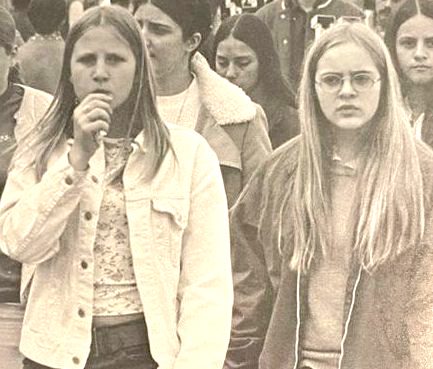
One bright spot for me during this time was seeing how many good people were in my sister’s corner, even though she probably didn’t even realize it herself. Not just Liz and Desiree, the outside caregivers I hired, but Peggy’s friend Michael had really come through for her too. He and I had started talking regularly, sometimes multiple times in a single day.
It turned out that Michael had been visiting my sister twice a week for quite some time; I just hadn’t run into him at her facility. He even took Peggy to the optometrist in August to get an eye exam and replacement glasses. I was really concerned about him driving her due to her incontinence issue (which had started to present itself), so I delicately mentioned it to him.
Michael was unbothered. He replied to me, “Oh, I know. Remember, for years I took care of my 96-year-old mother.” He also reminded me that he dresses people for a living. Of course! He had been a professional costumer for years. I realized that he had that rare temperament that leant itself so well to direct care, and that was great for Peggy. He’s probably seen it all—and very little fazed him. In fact, he told me that the day before, Peggy was wearing three bras when he arrived to visit her, so he removed two of them for her. No problem!
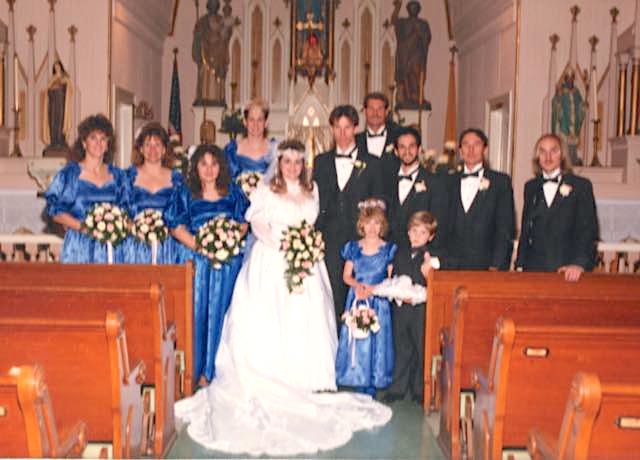
I knew Michael and Peggy had first met in junior college but that had been quite a while ago. So I was happy they had stayed friends for so many years. And I thanked the universe (and every deity I could think of) that he was still in her life in such a big way. He was fantastic with her. Everything he did for her went over and above, in my opinion. I would trust Michael with my life—and I know Peggy did, too. He’s an amazing person.
I wish I could say that the rest of August went well, but of course it didn’t. One day, I got 24 phone calls from Peggy before 1:30 pm, which was crazy. I didn’t pick up all of them, but I answered more than a few. Again, she couldn’t find the toilet paper roller in her bathroom and had a huge meltdown about it. I tried to tell her where it was, but she couldn’t follow simple directions anymore. Trying to explain where something was located was doomed to failure.
I could tell she was lost in the Alzheimer’s brain-fog-place, where she was zoned out from reality. It was a place where, as she once described to me, “sometimes I can’t do anything.” I couldn’t reach her when she was there; all I could do was wait for the fog to pass.
By the end of that day, Peggy had called me 31 times—a personal best for her but, obviously, not for me. All I could do was rely on my sarcasm and gallows humor to get me through.