
[TIMELINE: December 2023]
Throughout December, Team Peggy began settling into a depressing new normal. The medications that hospice had added to her daily regime created a calmer routine for her, this time with very few disruptive outbursts. So she was screaming a lot less, which was a relief. But Peggy was now so sleepy all the time! Memory care staff had been keeping her room fairly dark—lights off and drapes closed—with soft music always playing in the background (usually Fleetwood Mac or Stevie Nicks, her favorites). And her food intake remained lower than usual, so of course her weight loss persisted. I couldn’t help but think that she was probably getting too much Seroquel.
So I knew we’d have to keep fiddling with her meds to get the levels right for her. We hadn’t quite reached it yet, but I was hopeful that somewhere there was a balance.
As for me, I continued in my usual problem-solving and logistics-managing modes, with my perpetually growing follow-up lists always at my fingertips. I kept a full page of phone numbers for everyone at Kaiser, hospice staff, memory care staff, additional professionals like the optometrist, and all of Peggy friends who wanted updates. I was constantly calling hospice and memory care staff to get information about Peggy’s care and condition, though I was impressed at how hospice staff were pretty present for us. They actually called me—nearly every other day, in fact.
In the opposite direction, I contacted the members of our extended family and Peggy’s closest friends about once a week to provide general updates on how she was doing. Keeping up with all of Peggy’s friends was the best part of these efforts, because all of them are such wonderful people. I was grateful my sister had such people in her life who really cared about her.
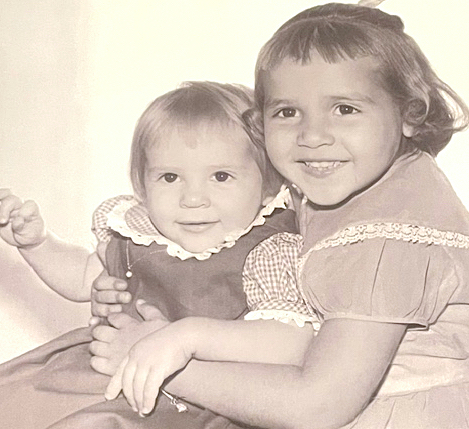
I was also glad that some of these friends were even able to visit with her this month, including Christine (with sushi), Janelle (who kept coming back), and Peggy’s best friend Michael (always). I also appreciated that our brother Les had been coming to see her semi-regularly. I think these visits were really important for everyone, and they created some lovely moments for Peggy.
Unfortunately, Covid risk loomed on the horizon. Just a week or so before Christmas, the Carlton’s assisted living facilities experienced an outbreak of the disease, so that side of the building entirely shut down to visitors. Memory care had been spared—for the moment. So that meant careful monitoring, and everyone had to mask. Even Les wore a mask (which he rarely did before) when he visited Peggy later in the month, Michael told me. It was a Christmas miracle for sure!
However, not every friend and family visit worked out the way that we wished it would. For example, Peggy’s former parks department boss and good friend Barb came by with chocolate right before Christmas. Peggy was so happy to see her! And their visit went fine…until it didn’t. For some unexplained reason (or no reason at all), Peggy just started screaming. It was surprising, because outbursts like that had become so rare since she had been started on the stronger meds.
After a while Peggy calmed back down, but Barb was quite bothered by what had happened. I was so sorry she had to be there for that! Later, Barb told Michael that it was the first time that she came to see Peggy when “Peggy wasn’t there.” What an apt way to phrase it, right? I had witnessed in Peggy that same strange detachment from reality during recent visits, but it was always jarring and surreal. It’s not something one ever gets used to seeing in a loved one.
We still don’t know what exactly caused Peggy’s distress that day, but at the time I searched for some clues. I also told the hospice nurse on duty about Peggy’s sudden screaming, and she jumped on the case. As it turned out, memory care staff weren’t reliably giving Peggy the additional Seroquel, she discovered. So, yes, sometimes Peggy was very sleepy, while other times she was still at risk of sudden outbursts. What? I couldn’t believe it!
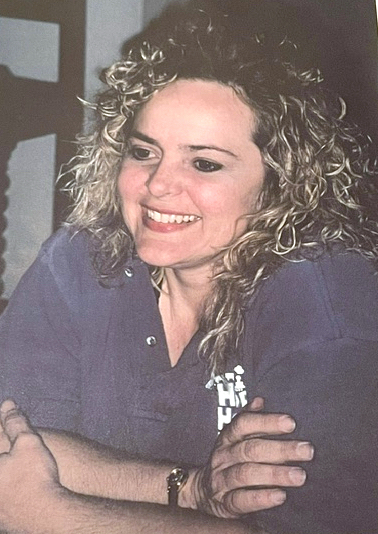
Thankfully, this particular hospice nurse was like a drill sergeant; I had no doubt that she would whip the staff into shape immediately—and sure enough, she wasted no time correcting things.
But I also wondered if the darkness in her room could be contributing to Peggy’s agitation. She had never been the type of person to sleep better when it was completely dark, unlike a lot of people, including me. No, my sister always kept a light on during the night. When I’d stay with her in assisted living, she always kept the bathroom light on and the door open. It made the entire apartment fairly light. And when we were kids, she always slept with a night light.
Michael agreed with my assessment and so did Liz, one of the private caregivers I had hired for Peggy. We all put our heads together and figured out how to add more light to Peggy’s room. We settled on the bedside lamp next to Memory Kitty, Peggy’s cat-shaped night light. Since her beloved Memory Kitty was already on 24/7, giving off its soft warm glow, we hadn’t used the lamp much. It was currently unplugged, but that was easy enough to fix. Hopefully, it would be enough.
I also had a conversation with memory care staff about Peggy’s window blinds. I requested that they leave them open at least half way from now on, even if Peggy were napping. I wanted my sister to have that natural light, on top of her lamp and night light, just in case it helped her.
At least Peggy still enjoyed her music! It was critical to her wellbeing, and always had been.
Ever since Peggy’s move to memory care, I had been working to convert her vast collection of vinyl records to a format she could play (and store) in her dorm-style room there. It was a slow process using a vinyl-to-MP3 converter and then burning those MP3s onto CDs, but I kept at it constantly. I made sure to bring her new CDs every time that I visited her in person. I even mailed a few to Michael so that he would have new music to share with Peggy often.
Peggy also had access to a little “Alexa music ball thingie,” as I liked to call it, because recently the Carlton had provided these devices to all the residents in memory care. You could ask it to play whatever you wanted; for Peggy, it continually played ’80s music. I’m not a big fan of Alexa and similar “smart” devices (which can invade your privacy if you’re not careful), but in this case, I was willing to look the other way. I accepted the good that came out of it.
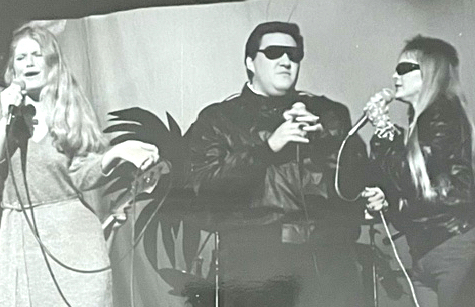
No matter how out of it Peggy had become—or would become in the coming weeks—music stayed with her, and it had a huge impact on her happiness. Music is processed in a different part of the brain, so it can still powerfully benefit a person with dramatic cognitive deficits. I saw that often with Peggy. For example, my sister loved karaoke. Even after a couple of years in memory care, she could sing all the lyrics to her favorite songs. When she was singing, you wouldn’t know she had Alzheimer’s, even if all the nouns were gone when she tried to have a conversation.
Peggy had experienced some really wonderful days in memory care when karaoke was on the menu, even if she was the only one who participated. She loved to sing Pat Benatar, Fleetwood Mac, and Stevie Nicks songs that staff would load up on the machine. Fun fact: Peggy also loved Madonna, but had to get permission to sing her songs because they were considered a little racy for the rest of the residents, most of whom were in their 80s! Which I think is pretty funny, but also silly. Were the lyrics of pop songs really registering that much to any of the elderly residents?
At this point, karaoke wasn’t happening anymore for Peggy, but she still sang sometimes in her room, especially if one of us accompanied her. And even when she couldn’t sing, her favorite tunes would still soothe and calm her—and often would bring a smile to her face.
By the time Christmas arrived, we were focused on those tiny, happy moments. What could we do to create them for Peggy as much as possible? To that end, Michael and I brainstormed presents for Peggy that we thought she would enjoy—a sweater and underwear—and he wrapped them for us. And when he showed me his craftsmanship, I had to laugh. He had wrapped the top and bottom of the box separately, just like they do for stage productions.
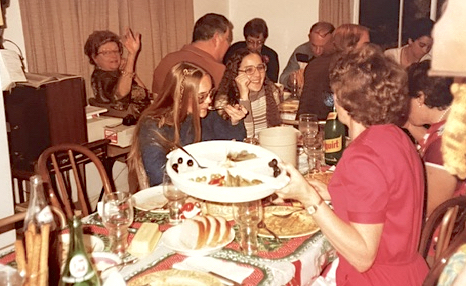
Apparently, Michael’s expertise from working in theater costuming for so many years also came in handy for making props. This wrapping technique was also used on TV all the time! Whenever a character got a nicely wrapped present, they would just pop off the top half of the box, so no need to rip away all the wrapping paper. I remember seeing it on the soap opera All My Children when we were younger, and it became a sort of inside joke among Peggy, me, and our aunt, where we would wrap presents like that to each other. I asked Michael to mention it to Peggy. I hoped that if she happened to be in the right frame of mind, and if she remembered, it might give her a laugh.
Obviously, Christmas in 2023 was nothing like the enormous holiday celebrations of years past, when our entire extended family gathered and feasted, and that sucked. But at least my sister was cared for and safe, and she got to spend a little festive time with Michael and the other friends and family members like Les that popped in to see her (masked) before the end of the year.
Peggy even went days without seeing The Lady, her recurrent (scary) hallucination, or screaming at all. Did I have diminished expectations? Yup. But I marked these as wins anyway.
The only thing we still hadn’t sorted at all by now was Peggy’s weight. Her appetite was the worst I had ever seen it; we were lucky if we could get her to eat a few mouthfuls of anything. Getting liquids in her was easier, but it was still difficult. It remained a huge worry in the front of my mind as the year drew to a close. I knew the situation was urgent, so I planned to consult with hospice at the earliest opportunity. It wasn’t a guarantee that they could help, but I had to try.
In the meantime, my partner Jon and I focused on each other for a couple of days. We were able to catch a breather over the holiday, and reflected on our unique situation. Even though we didn’t have children of our own, my responsibility for Peggy and Jon’s for his elderly mother effectively still qualified us as “sandwich people.” We were stuck in between two generations of loved ones who needed care from us both, and that left us with little time for ourselves.
We also felt like we didn’t have much control over where we lived, since we were being pulled in these opposite directions. Due to Peggy’s sudden and debilitating illness, we needed to live on the West Coast (as we had for decades) to be near her. But Jon’s mom lives across the country from us on the East Coast, with only him and his brother to look after her.
It was a constant source of additional stress for us, so my therapist Katy suggested that we examine our attitudes about it. How could we use our time together between now and the end of the year to work on that? What could we do to make peace with the situation?