
[TIMELINE: December 2023]
By the beginning of December, my overwhelming exhaustion was really catching up to me, although even in that state I could recognize the fantastic care that hospice staff had begun providing Peggy. I finally felt like things were getting under control. By the middle of the month, the change in medications had started to work. Peggy seemed calmer, and her screaming had subsided. Maybe she she wouldn’t get kicked out of memory care after all?
But—and you knew there was a “but” coming, didn’t you?—not everything was smooth sailing.
Peggy was still not eating enough, and I was concerned about that. Also, recently she had begun exhibiting a new degradation of her memory and perception. As her best friend Michael explained, there had been several moments when Peggy had spoken to him as if he were me. He said he usually let it go, unless she was waiting for a reply. And if that happened, he would remind her who he was. Unfortunately, she often would just give him back a blank stare in response. Not good.
Michael also told me that Peggy still spoke a lot during his visits—just not always in English or directed at him. I certainly knew what that was like! It can be really strange to witness. It was those short, spiky, staccato sounds she made that she thought were words, but were nowhere close. And, sadly, sometimes when she was more lucid she would still lapse into worry about The Lady, her recurring hallucination. As usual, Michael would have to remind Peggy not to trust anything The Lady said, which sometimes worked to calm her and sometimes not.

The day after Michael updated me on all of this, I was able to Facetime with Peggy, thanks to the help of Desiree, one of the private caregivers I had hired to supplement the staff. Peggy was in bed after dinner—which she barely touched, Desiree told me. Again, not good. To my surprise, though, Peggy was in a great mood, and she smiled all through our call. Also, she was fairly coherent; there were very few made-up words in her speech. It was all really, really nice to see.
I was grateful my sister had Michael in her life. Not only did he visit her every other day, he touched base with me constantly to share how she was doing, in minute detail. Best of all, I know that each time he went to memory care to see her, he did his best to get her to laugh. Even if she was confused sometimes, she was still always happy to see Michael. And I tried to get a laugh out of her, too, whenever I visited and spoke to her on the phone. So at least she had that.
Still, nobody’s perfect! Even though Michael is, was, and always will be “the guy,” a quick verbal slip-up early in the month nearly caused Peggy to spiral. I couldn’t have predicted that.
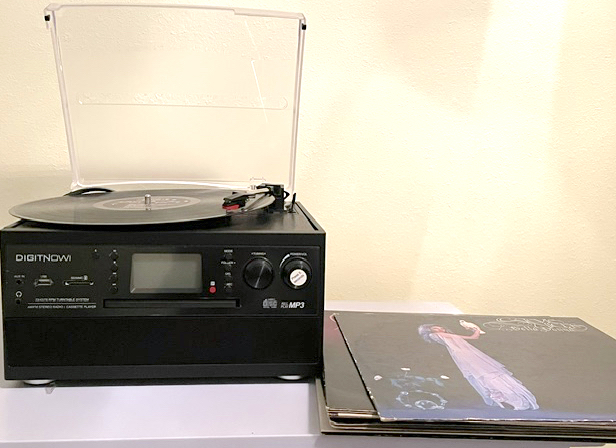
Apparently, Peggy and Michael were watching videos of Fleetwood Mac, and he kept seeing various new tributes to the band getting posted online, as well as a montage of concert photos that are typically shared when a famous musician dies. He wondered, Did something happen? Sure enough, Christine McVie had passed away a few days before—and the news took him so much by surprise that he just blurted it out right in front of Peggy. Ooops!
Peggy was shocked—and, of course, she became instantly worried about Stevie Nicks, her favorite member of the band. Michael assured her that Stevie was alive and well and touring, but she was still concerned. Her reaction wasn’t anywhere near as dramatic as when she heard bad news about our family, but it was the kind of thing that we tried never to mention to her.
It would have been so much better if she hadn’t been told. I can’t cast stones, though, since I had my own blunder recently when I switched out my mask for a spare one printed in a completely different decorative pattern. That really confused and upset Peggy, too! It’s good to remember that if you are caring for a person with dementia (PwD), you should always try to be super careful about what you do and say—and wear—in front of them. But it’s also important to know that little slip-ups will happen, in spite of your best efforts. All you can do is move forward.
Later on, I was glad to learn that Michael had soothed Peggy eventually, and she didn’t have too much of a meltdown. Whew! Then I was able to Facetime again with her, this time with help from Liz, her other private caregiver. Sure, our conversation was a little word salad-y, but she was way more coherent than not. Her words were in English, not the gibberish she used sometimes.
It was great! I took it for the win that it was—and then my brain quickly summoned the gallows humor. I couldn’t help but think that speaking in tongues is lovely to experience from, say, Lisa Gerrard of Dead Can Dance (a wonderfully talented band), but not so lovely to witness from a regular PwD who believes they are speaking in English but are missing the mark by a mile.
A couple of days later, Peggy enjoyed some more lengthy bouts of coherence plus a pretty amazing day, which I was thrilled to hear about. That Saturday started out with Michael and Peggy going through photos and enjoying ’80s music together. Then Peggy’s friend Christine walked through the door bearing sushi! It had been one of my sister’s favorite foods but, to the best of my recollection, she had not eaten it in a few years. Peggy was so excited!
All in all, Michael and Christine spent a large chunk of the day with Peggy, and it kind of wore her out, in a good way. She had gotten to enjoy many hours of happiness and excitement. Afterwards, it was nap time for Peggy. Like I said, she was worn out—but genuinely happy. Michael told me that he thought it had been one of her better days in a while.
The following Monday, our brother Les stopped by memory care stayed for about an hour. While he was there, he called our Aunt Betty and put her on the phone to talk to Peggy. At one point, Aunt Betty and Les spoke to each other for a bit, which was a bit confusing. Peggy probably thought they were both in the room with her, instead of Les in the room and Aunt Betty on the phone. But it didn’t seem to matter, I think. I heard it was still a good visit!
However, it was not enough to get Peggy to eat much. This time around, it seemed like the problem was what had been served, a ham sandwich covered with mustard. Peggy never liked mustard, and staff couldn’t scrape enough of it off to convince her to eat the rest of the sandwich.
Another distressing development was that Peggy had become quite sensitive to touch—which is a textbook symptom in the later stages of Alzheimer’s. I’d seen this once or twice before with Peggy, so it had been a harbinger for sure, but now it seemed to be her permanent reality.
Michael told me about one incident in which Peggy was in her wheelchair, and as he moved her into her bedroom he accidentally bumped into the dresser. That set her off terribly, he said. “She screamed so loud you would have thought I had amputated her leg with a rusty ax while she was wide awake,” he told me. “She scared me to death! I have no idea why she screamed so loudly. I had no idea I had even bumped into anything, that is how slowly I was going.”
I had seen a similar thing once when I was there and one of the caregivers was putting Peggy down for a nap. You would have thought they were beating her up instead of gently tucking her in! So I knew this was now something we had to watch very closely in the near future.
That same day, I had a phone meeting with the memory care director and one of the hospice nurses. Peggy would now be on both Seroquel and Depakote. Seroquel is an antipsychotic and Depakote has several uses, but in Peggy’s case, it would be used as a mood stabilizer.
I hated to see Peggy on such strong drugs, but I think it was necessary. We had to find a way to calm her down. At least nothing more was said about Peggy getting booted from memory care. Her placement seemed secure for the time being, but my fingers were crossed—again.
All of us on Team Peggy were now entering the most challenging phase of her illness, especially Michael and I. We were getting into the time period of, essentially, one disaster after another, with very little goodness expected on the horizon. We had not reached this terrible point before, but now we had arrived. My sister’s moods could turn on a time, and then she would be screaming over seemingly nothing and we would be left scrambling, wondering what had happened.
So we hunted around for the good things, minute to minute and hour to hour. We had no power to stop the ways in which she was deteriorating physically, so we put all our efforts into keeping her in a good place emotionally, with her favorite music and her favorite people around her.
At least we had some expert help, for which I was extremely grateful. By the middle of the month, Peggy’s hospice team was finally in place—several nurses, a social worker, and even a chaplain, just in case. (I knew Peggy wasn’t super religious, but when they asked me about spiritual care, I accepted the offer. I thought a priest might be helpful; if not we could stop his visits.) Now there were so many more eyes on Peggy, which meant more relief for me. For all of us, really.
And we added Ensure to Peggy’s diet. After planning for it a long time, we finally went forward with it. We needed to get more calories into that girl! And here’s another bit of my gallows humor: We had her doctor’s permission to put her medication in her protein shakes and even to sprinkle it on her food, to make sure she got the right dosages. Um, yay? Spiking an unsuspecting person’s food with heavy duty drugs—isn’t that the plot line of a million evil husband/boyfriend movies?
Even at this late date, with Peggy’s condition so severe, I was still wrapping my head around the concept that we needed to get a lot more drugs into her. Drugging someone as a goal was not my normal way of thinking, so I used dark humor to cope. It was the only way!