
[TIMELINE: November 2023]
By early November, Peggy was chatting even more frequently to the photos of loved ones in her room, a steady increase in the amount of time she spent disconnected from reality. Apparently, she was also now having complete conversations on the regular with one of my photos, according to her best friend Michael, who visited her in memory care every other day.
My therapist Katy had suggested that this might simply be a way that my sister found comfort, which made sense since we could not be there in person with her that often. Still, it was unsettling. I can’t fully express just how creepy this was to me (and still is), but I had more pressing concerns—namely, whether or not Peggy’s placement in memory care would remain secure.
Although a recent medication increase had effectively limited her bouts of yelling and screaming, her behavior was still so unpredictable. So my stress level was pretty high during this time, and I became increasingly worried that Peggy might get kicked out of memory care. Believe it or not, that happens sometimes, for a wide variety of reasons, like screaming, violent behavior, unwanted sexual advances, and other major disturbances. I kept my fingers crossed that Peggy would be able to stay in familiar surroundings until the end, with the caregivers she trusted.
In the background, another source of stress for me was our brother Les, who had been visiting Peggy on a semi-regular basis for the past few months. I know Peggy loved seeing him, especially since he had avoided her facility for nearly two years for reasons he never explained. Perhaps he had stayed away due to the start of the Covid-19 pandemic, or maybe he became uncomfortable when she moved to memory care, which is very different from assisted living. Who knows?
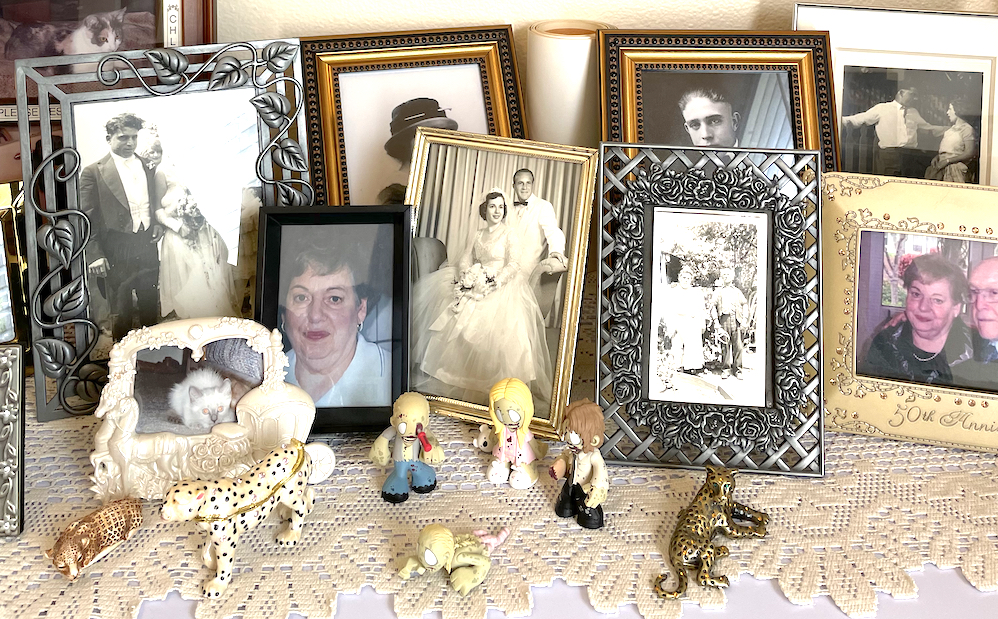
It took a face-off with me at our Uncle Nick’s funeral that spring to convince Les to start visiting Peggy again. It was critically important to her wellbeing, so I was glad he was complying with her wishes. Still, I braced myself for any possible distressing outcomes, because Les and I had never seen eye-to-eye about Peggy’s care, not since the very moment of her diagnosis.
All of the big decisions that needed to be made on her behalf (and many of the day-to-day ones, for that matter) fell to me—but that never stopped Les from swooping in unexpectedly now and then to challenge the status quo or to say something to Peggy out of turn. For example, when he first saw her again in June, he was furious at her appearance; he spread around a lot of negative opinions about her care because he thought she looked too old, and almost unrecognizable. I was actually worried that he would threaten to sue her facility. It was beyond frustrating.
Les also seemed incapable of keeping bad news to himself, despite me telling him (and all of our family) over and over again that we should not share that kind of information with Peggy because it would negatively impact her wellbeing. Yet sure enough, he visited her early in November—and revealed to her that our Aunt Betty was now in bad health. Internally, I was raging. That guy.
How may times had I told Les that Peggy could not process this kind of information anymore and that it distressed her? I had no idea what strange notions popped into his head that compelled him to do this. Why would he think that it was a good idea, or necessary, to share this negative information with Peggy? Not for the first time, I considered asking memory care staff to ban him from the premises—ultimately, though, I didn’t go through with it. I didn’t want Peggy to miss out on visits from any loved ones, no matter how problematic they were for me personally.

Fortunately, Peggy had been enjoying some other wonderful visitors lately, and that gave me a bit of a boost. I was particularly pleased by the fact that my sister’s best friend from high school had become the latest member of what we were calling Team Peggy. In recent weeks, Janelle had come by to visit Peggy for the first time in a long while, and I had the chance to speak with her.
It was great to see her! Even though Janelle was fighting back tears, she told me she still wanted to be part of Peggy’s life. Thank god for her. I was so glad she was there. And to my relief, Peggy recognized Janelle instantly, even though her perception skills had begun a steep decline.
In fact, there had been a couple occasions already when Peggy didn’t even recognize Michael at first glance, which surprised me to hear since he and Peggy were so close, and he visited so often. The very first time it happened had been about a month or so before; looking back, that was a harbinger. It really rattled him, but when it occurred again this month, he took it in stride.
At least when it happened, Peggy’s recognition of him always came back eventually and she would recognize him, Michael told me. His theory was that as Peggy’s age mentally regressed, in comparison Michael looked way too old for him to be her friend, her peer. Maybe in Peggy’s head, he resembled a friend of our parents’ instead? In reality, Michael looked great (and still does). I’ve seen photos of him in his younger days, and I think his face has barely changed at all. But his hair is gray now, so maybe that was what confused Peggy sometimes.
I think this was Janelle’s secret weapon for Peggy recognizing her—her physical appearance had not changed that much from when we were in high school, neither her face or her hair!

Like Michael, my hair changed a lot too. I actually started to worry before my upcoming visit that Peggy wouldn’t know me when I got into town. Sure, she had been talking to my portrait, but I’m 20 years old in that photo! I don’t look like that anymore. I knew that my voice would be recognizable to her, at least, since we talked on the phone every day. But I was still apprehensive.
What new challenges might lay in store for me at this next visit? In what ways would I have to improvise, distract, or soothe in order to keep Peggy calm and in a good mood?
For one, I know she wanted to see our mom, who had passed away more than a decade ago. At one point, Peggy knew this fact to be true—but now, I guess, she didn’t. It had just come up in conversation ahead of my visit, and I was a bit unprepared for it even though I knew there would likely be a day when it would happen. My gut feeling was that it would have been the absolute wrong thing for me to tell her the truth. I was sure that it would upset her, then about thirty seconds later she would forget it, and I would have to tell her again and she would get re-traumatized.
The best thing to do was lie, what caregivers called a compassionate fabrication. I told Peggy that our mom was in our old home town—which is true, sort of. Her ashes are there. I also said that mom was stuck in traffic, and would be there soon. That story worked until the end.
Thanks to the advice of my fellow caregivers on the AlzConnected message board, I had lots of these kinds of distraction strategies in my arsenal. However, I was not prepared for time travel.

Here’s what happened. A couple of days before my partner Jon and I left to go see Peggy, I got an upsetting email from Michael, letting me know that his last two visits with her that week had been really difficult. The biggest issue was that it seemed at times now that Peggy believed she was now existing back in time, when we lived in southern California. We moved from that house before she was 11 years old, so this was a shocking development. Was she really stuck in a mindset that far in the past? I had read a bit about how this sense of time travel can happen to some persons with dementia (PwD) in the later stages, but it was still surreal to hear about—and a little scary.
On top of that, Michael said that Peggy’s yelling and screaming had been so intense that memory care staff had to put her to bed before he could leave. And getting Peggy to successfully go to the bathroom now was a big fight, too, with much more agitation and screaming. When Michael visited her the day after next, he could hear her screaming from all the way down the hall, he said.
That day, Michael kept her in her room for the entirety of their visit, in hopes of cutting down on the screaming in general—and limiting the noise disruption to other residents. Even then, it was “touch and go,” he said. Most of the time she wasn’t even talking to him, just yelling gibberish at The Lady, the recurring hallucination that constantly harassed her
One of the worst things, Michael said, was that Peggy was convinced The Lady had done something violent to me that had caused my death (or near-death) multiple times. Nothing Michael could say to Peggy, or promise he could make to her that I was fine, would comfort her. And then when he tried to brighten her day by telling her I’d be there to visit in two days, she looked at him like he was a total idiot—and told him I’d been there all morning. I guess I’d survived my multiple death attempts, I thought. Sometimes, the gallows humor was the only thing keeping me sane.
The aggressive return of Peggy’s outbursts, plus all this new weirdness in her perception, freaked me out. She was being hugely disruptive. It seemed like it really was only a matter of time before she would get kicked out of memory care. Jon and I had started looking at group homes in earnest, just in case, but we both worried that uprooting her could make things worse for her. This concern hung like a cloud over our heads as we pulled into the Bay Area.