
[TIMELINE: November 2023]
Our drive down to San Jose for an extended visit with Peggy was filled with apprehension about the week to come. Would she recognize me? Just how badly was she losing touch with reality? Was she really becoming so disruptive to the other residents that she was about to lose her memory care placement? And if so, could we do anything to prevent that?
After we made it into town and we went to see her that first day, Peggy did recognize both me and my partner Jon, and I was so glad for that. One worry to check off my list, right? Well, not really.
I went back to memory care again a day or two later—and it was a hellish experience. At first, it seemed like Peggy was talking to me normally, like any other conversation, but quickly I noticed that something was off. I don’t think she actually realized that I was there in person!
In fact, I think she was talking to a photo of me, not to the me who was in the room with her. I knew that she had begun exhibiting this strange behavior lately, but I had not personally witnessed it before. It stressed me out so much. It was deeply weird when she did that. And instances of it had been steadily increasing in recent weeks, according to her best friend Michael.
While that was happening, Peggy’s high school friend Janelle and her husband Roy came by to visit. They had all been friends for decades. Sadly, their presence didn’t register with my sister at all. Usually, Peggy would recognize Janelle right away, especially as her appearance had not changed much in many years. But on this day, it seemed like Peggy didn’t realize they were even in the room. They couldn’t interact with her at all, so they left after about ten minutes.
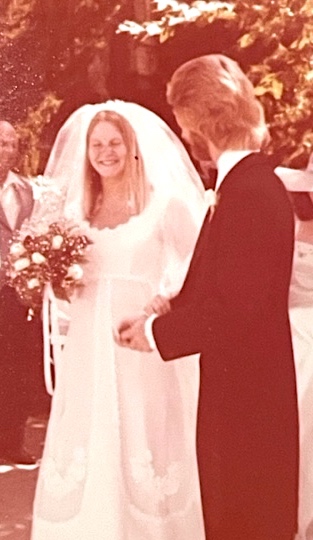
Later in the day, Peggy slowly came back to reality. She understood that I was there in person, and she was able to converse with me (the real, human, non-photo me) at last. We talked about Michael, her other friends, and a few more topics, and she was very present for all of it. During our chat, the med techs came in with her prescriptions, and she swallowed them! That was good to see, since apparently she had refused her meds on a few occasions recently. Woo hoo!
Then Peggy told me, again, that sometimes she “can’t do things,” and I commiserated with her. It was her usual refrain when she slipped into that typical Alzheimer’s fog/haze, a.k.a. being “On Pluto” as author Greg O’Brien puts it. It’s a soothing, remote place with its own gravitational pull. I expect that’s where she was when I first arrived, and where she slipped back to before I left.
I was grateful to connect with the real Peggy for at least a short while in between, as her truly lucid moments were becoming fewer and fewer. The situation was unpredictable and heartbreaking. At one point, she even turned angry and yelled a bit before returning to her fog. She still seemed to know I was there, at least, but at no time during my visit did she get up and out of bed. I sat with her all afternoon, and she just sort of drifted in and out the entire time.
At the end of the day, I was spent. All I could do was count down the minutes until the imminent arrival of Desiree, one of Peggy’s private caregivers, so I could flee—right into rush hour traffic. But being stuck in my car for hours was so much easier than sitting in memory care.
Once I got back to our hotel nearby, I reached Desiree on the phone so we could compare notes on how Peggy was doing. She told me that she’d never seen Peggy like that before. She also clued me in to the fact that Peggy didn’t eat anything for dinner after I’d left.

The next day, Peggy didn’t eat anything again either, according to Liz, her other private caregiver. A few days after that, Liz suggested to me that maybe it was time we started seriously looking at meal supplements like Ensure or Boost. I reckoned with the fact that transitioning Peggy to a liquid diet was yet another sad milestone we would soon be forced to cross.
Another stressful part of this visit for me was finally having that planned sit-down talk with the director of Peggy’s memory care. Ugh. She told me in no uncertain terms: If we didn’t get Peggy’s yelling and screaming under control again, they would have to boot her from her placement there. So it was official. What we feared was going to happen really was about to come to pass—unless something changed, and soon. Peggy’s outbursts had resurged, and gotten progressively worse.
Michael had warned me that this seemed to be the case; apparently, higher doses of trazodone for Peggy had secured only a brief lull in this disruptive behavior. So once again I pleaded with Dr. Phan, Peggy’s geriatric psychiatrist, for yet another review of her medications. She agreed that stronger drugs, or a combination of them, would likely now be required to keep Peggy calm.
We had been delaying that change as long as possible due to the potential for serious side effects, but it was time. Of course we didn’t want harsh drugs to cloud Peggy’s mind any further, but Jon and I figured that the alternative—her having to suddenly move to a new facility, like a small group home—would be so much worse for her, and disrupt her fragile mental health.
After a few more visits with Peggy that week, we headed back home, where I reflected on all that we had experienced with her. There were so many issues to process.
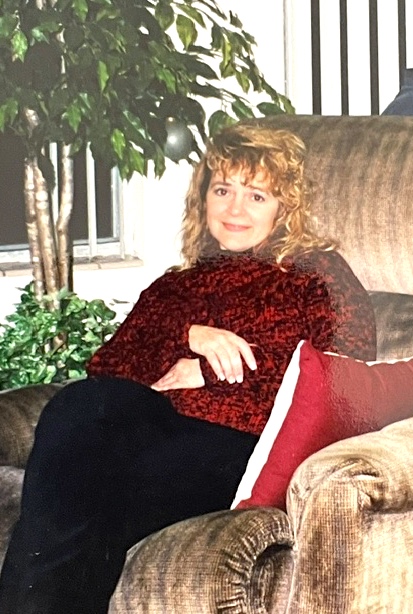
First, Peggy had lost a lot more weight, even since our last visit less than a month before. I wasn’t sure why she wasn’t eating more. Was it lack of interest? Lack of appetite? Could she not taste food properly anymore? Sure, Peggy was often distracted at mealtimes by The Lady, the recurring hallucination that harassed her—but that couldn’t account for all her recent weight loss, could it?
Peggy’s disinterest in food presented another problem, too. With her doctor’s permission, the med techs in memory care had started sprinkling her prescriptions into her food, to get past her occasional resistance to taking them. But if she didn’t eat, she wouldn’t get the right doses! That would result in more screaming, which could only be muted periodically by the right meds.
I also thought some more about Peggy’s further disconnection from reality, and how surreal that was, and I wondered how much worse it might get. By this time, Peggy had completely forgotten that both of our parents had passed away, so when they came up in conversation I had to be pretty nimble. When she asked for our mother or father, my story continued to be that they were stuck in traffic—and it always worked, but it came up again and again and again and again.
Honestly, I had hit my very last wall. I had to admit to myself that I was completely on edge, exhausted, overwhelmed, and close to burn out. Who knows, maybe I was already burned out and didn’t know it yet? Cue the song “Masque” by Ashbury Heights, from which I took a little comfort:
On the best of days I’m a loaded gun
On the worst of days I’m a burned out candle
And the wind keeps blowing down my house
Changing direction north to south
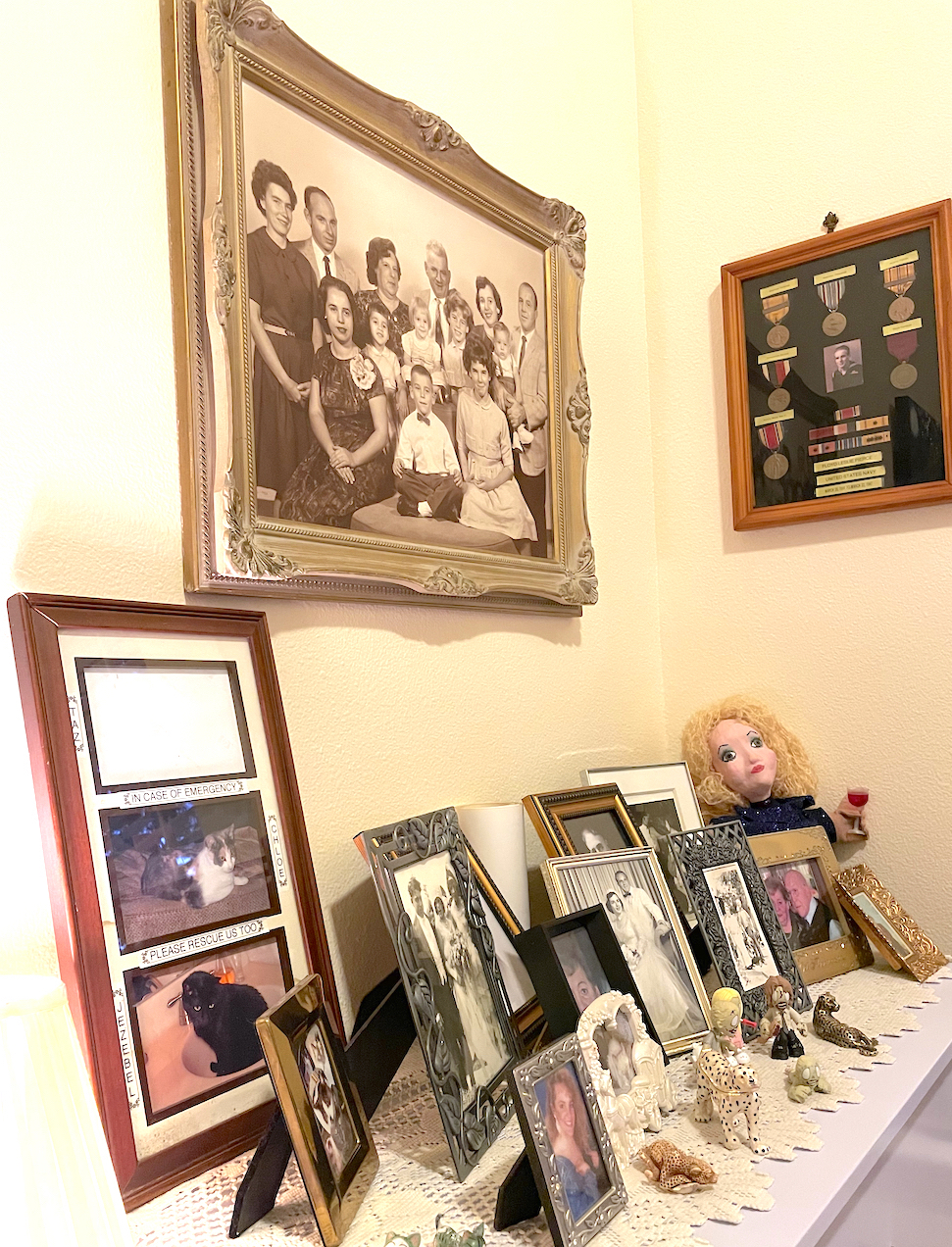
Those lyrics really struck a chord with me; how could they not? They were so true to my situation. And there was no denying what to do next. I knew I needed to arrange for hospice care.
At my much-needed session with my therapist Katy a couple of days later, we talked about this and the other options for Peggy, how worried I was about everything, and most of all my fear that Peggy could get kicked out of memory care. How much notice would I get, and what was the process before that happened? Katy assured me that if that before anything proceeded, we should schedule a conference with the staff and a social worker—a team meeting, of sorts.
I asked Katy, Could we do anything else to avert this? She thought it was best to wait and see first what hospice had to say. I thought that sounded reasonable, though it didn’t make me any less stressed. So a few days before Thanksgiving, I made the call.
I wasn’t sure Peggy would be eligible for hospice, but I had to hope. In general, hospice is for people who have six months or less to live, but the criteria is different for persons with dementia (PwD). Hospice Admissions Guidelines for Dementia & Alzheimer’s and Hospice Care for Dementia: When Is It Time? are two good pages discussing this. But even though I wasn’t sure, I figured it was worth a try. I knew Peggy would benefit so much from the extra care!
After several days on the phone and exchanging emails with hospice staff—who worked for the same Kaiser HMO that was part of her existing health plan—they evaluated Peggy the day before Thanksgiving. Much to my relief, they approved her application. The clincher for them was that she had lost more than fifty pounds in a short time. Damn. I was grateful they accepted her into their program, but what a horrible watershed moment. I had not realized she lost quite so much.

I spent all Thanksgiving Day filling out forms for Peggy and getting all the non-stop hospice bureaucracy out of the way as much as I could. I was astounded that the hospice administrative staff all worked on Thanksgiving Day and through that week, but I was so glad they were there. I had so many questions! And so did they; I fielded additional hospice calls for days.
It was all for a good cause, and a necessary one—but still so ridiculously stressful that I remember the entire period negatively. To be sure, it was such a far cry from how we usually celebrated the holiday that I remember thinking to myself “This has got to be the worst Thanksgiving ever.”
And even though it was great that hospice was now involved, believe it or not I was still stressed out about the possibility of Peggy getting kicked out of memory care. We had hope, but no guarantees yet that their assistance would ensure her security there.
Thankfully, hospice staff confirmed that they would be taking over all of Peggy’s medications, which was a huge relief, because clearly what we were doing wasn’t working. Another plus was that I didn’t have to do anything more to coordinate hospice staff with Peggy’s doctors, since they were all part of the same plan. Hospice would consult with Peggy’s existing doctors as needed.
Now it would be much easier to get Peggy’s medications changed—like from trazodone to Seroquel (quetiapine) for example—or anything else she needed. I knew that some people with dementia have had success with Seroquel for agitation, so my fingers were crossed that it (or a similar drug) could be added to Peggy’s regimen and get her screaming under control, which would thus hopefully prevent her from losing her placement in memory care.

Hospice staff would also be keeping closer track of Peggy’s weight from then on, with regular weigh-ins, likely in the shower. I had no idea this was how it was done exactly, but staff mentioned this method as an option for patients who can’t stand on a regular scale. Peggy would also get a new, fully electric hospital bed (so no more hand cranking) and a better wheelchair.
In just a few days, it seemed that hospice staff had a good handle on just about everything concerning my sister; in retrospect I probably should have called them a lot sooner. There’s a lesson there: Call hospice early and often. I could finally breathe again.
Immediately, I informed Team Peggy that she had been accepted to hospice. Everyone—her friends Michael, Dodie, and Janelle, and her private caregivers Desiree and Liz—had the same reaction as I did: relief, but also sadness that we had reached this point of her illness.
Not long after Thanksgiving, Peggy had a “good” day. Really it was a mixed day, but a mixed day was better than a bad day. That’s how we counted wins! Things started out iffy, but savvy Michael turned things around quickly. Here’s what happened: Peggy had barely eaten her lunch because she thought I was there in person, and she wanted to save half of it for me. Michael tried to convince her that this lunch was all for her and that I would eat lunch at my own house.
Well, Peggy didn’t believe him because “I was right there in the room,” she said. Yep, my photo was right there in the room, but I was not. So, Michael told her a rare bald-faced lie. He said that I had just turned to him and said that I didn’t want to eat any of her food because it was all for her. Peggy was shocked! “Really?” she asked. “Oh, ok.” And then she started to eat the half she had saved for me! She ate almost everything on the plate. Yay!
So playing along now, with whatever Peggy perceived, was the name of the game. And when it worked, it was wonderful. I know it doesn’t sound like much, but by now Peggy had so many bad days that this small success—getting to her eat, and happily—was worth celebrating.