
[TIMELINE: January 2023]
The day after New Year’s, my sister seemed to be in a better frame of mind. This eased my worries a bit, since she had been struggling so much recently with her emotions and moods. I talked to her friend Dodie and she was relieved as well. Unfortunately, Peggy spiraled again only a few days later. Memory care staff called me that morning to say she was curled up in a ball on her bed, crying, and holding a photo of our parents. Yet again, “just kill me now” was the first thought that flashed into my mind. I hated hearing Peggy so upset, and I wasn’t sure how best to comfort her. And, of course, I was still at my wit’s end about our brother Les.
I still don’t know completely what was in Peggy’s head that day, but her learning from Les that our Uncle Nick had died was certainly a catalyst for that breakdown. In the moment, she might also have been remembering that our parents were gone, but mostly I think she was just feeling a big, general sense of loss. Since her brain no longer had the ability to process the news about our uncle, her emotions about everything got too overwhelming for her.
I was between visits—hundreds of miles away—but I still hoped I could help keep things from escalating. So I stayed on the phone all morning with memory care staff and with Dodie, and we brainstormed how best to calm Peggy down and shift her focus.
At this point, Peggy’s dementia decline was accelerating. I saw it, and so did everyone else. My best guess was that she was still in Stage 6, since she was still fairly verbal and could construct short sentences. She had a lot of words left in her! But she did speak in word salad a lot of the time and it was getting worse. Pretty much everything was worse, actually, and more often than not her mental state was pretty poor. I wasn’t sure exactly how to evaluate the situation.
I also wasn’t sure what to do about our brother going forward, and that weighed on me. On the one hand, I really wanted to ban Les from contact with Peggy—he was proving to be too much of a loose cannon, without a shred of empathy for others. Everything was always all about him: what he wanted to do, and what he thought was best for any important decision. Even if he knew nothing about a given issue, he wanted things done his way, actual evidence be damned!
On the other hand, l knew family was the most important thing to Peggy, and not being able to talk to Les would have been hugely upsetting to her. There just weren’t any great options.
If I put the best possible spin on it, I could admit Peggy’s spiral wasn’t completely his fault, per se, since her disease was always going to progress that way. But just like when her cat Jezebel died 18 months earlier—which I think is what first tripped her into Stage 6—her condition declined further due to the emotional upheaval. I was really bummed that it was triggered by news we could have (and should have) kept from her. And I wish Les would have listened to me, because maybe we could have staved off her slide a while longer.
Despite my anger and sadness, however, I decided to wait and see before taking any major action with Les. Making sure Peggy was okay—or at least okay-ish—was my top concern, so I needed to expend my energy there first. I didn’t know if she would bounce back to baseline or if we had moved into a new, lower baseline, so I contacted her geriatric psychiatrist immediately.
I asked Dr. Phan if there were any different medications we could try, and I also filled her in on some of my sister’s most recent challenges. One new thing that had stood out to me was it seemed like Peggy’s mornings were bad, though her afternoons were pretty good. Dodie had also been worried that Peggy was not sleeping well (which I knew to be the case), so that was another avenue I thought we could pursue, in hopes of improving Peggy’s quality of life.
Dr. Phan suggested a dosage increase to Peggy’s antidepressant (sertraline) first before we tried anything else. Fingers crossed! But it would take a while before it kicked in, so we wouldn’t know for a few weeks if it was helping her. All we could do was wait.
In the meantime, I got an update about Les from my cousin Nikki. It was about as terrible as you’d expect. Apparently, Les had gone to visit Peggy in memory care without mentioning it to me, and he was so upset and angry about what he saw that he gave our Aunt Betty an earful about it. He had a list of complaints, but the gist of it was that he thought Peggy looked really old—almost unrecognizable—and he didn’t like the condition of her body at all.
I couldn’t believe it! I was so offended for Peggy. His arrogance really set me on edge. I worried that Les would call memory care and harass them about it. If he did, though, I was fully prepared to side with the facility staff, since I thought they had been doing a great job. People with frontotemporal dementia (FTD) can be a handful, and our sister was no exception. Thankfully, I held Peggy’s durable power of attorney (DPOA), so I knew that I would continue to make any necessary decisions for her, not him, even if he tried to interfere or force the issue.

Yes, Peggy had changed in the past couple of years, but I’m really not sure what he expected. She was 64 years old with late-stage Alzheimer’s! Was he hoping she would travel the same route as the dying heroine in Love Story, who became inexplicably prettier the closer she neared to the end? That was never going to happen! Perhaps if he had visited Peggy more often, he wouldn’t be so shocked at her appearance. His reaction told me all that I needed to know: Even though he lived less than an hour from her facility, Les hadn’t been to see our sister in quite some time.
I was fuming with anger right back at him. I know he did visit her back when she was in assisted living, albeit very rarely—but obviously he hadn’t seen her in person in many months, likely more than a year. And none of the dedicated staff currently working in the locked memory care unit knew Les or had ever seen him. In fact, when I drove down for my next in-person visit some weeks later, a few staffers told me that they didn’t even know Peggy and I had a brother at all!
At least there were a few bright spots that month, as always. When I next spoke to Peggy, she sounded much better! It was no surprise why: The activities in memory care that day had included karaoke singing, which always made her incredibly happy. It definitely eased my concerns about Peggy to hear that she had a good day and enjoyed herself.
Around this same time, though, Peggy kept telling me that the staff wanted her to eat Uncle Nick—and now she also thought that staff wanted to eat her! This was a new development, which I struggled to parse. This only happened at lunch, not at dinner. Weird! I wondered what that was all about, and what was going on at lunch time that made her think this? Another weird thing was that she said she wasn’t sure if the clothes she was wearing were her own, or if they belonged to Uncle Nick. She was also not sure if her hands belonged to her.
And even though Peggy said she knew Uncle Nick had passed away, she still wondered if she could talk to him. For several months, she even thought she saw him in memory care, walking around. That was the unpredictable nature of her disease, that somehow these two opposing thoughts could exist in her brain at the same time.
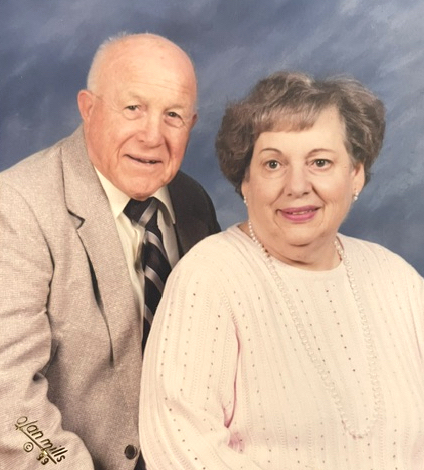
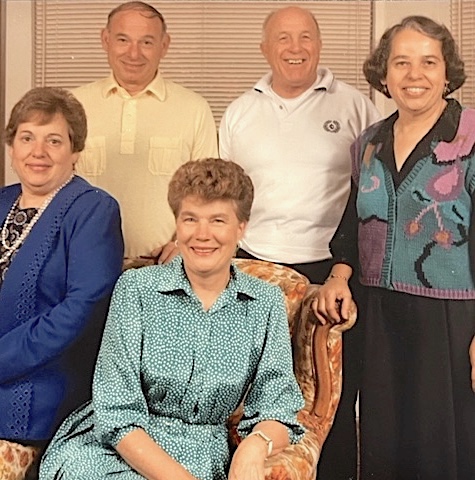
Peggy also began to think that Aunt Betty was young, not 91. I think she was starting to confuse who she saw in old photos versus what they looked like in the present day, or the last time she saw them in person. Her bedroom was filled with family photos; in addition to the big family group photo of all of us, she had individual portraits of our grandparents and aunts and uncles right above her dresser. She saw all of these pictures every day. Her favorite photo of Aunt Betty and Uncle Nick captures them in their 30s, so this was probably what popped in her mind when she thought about his death. I can imagine how disconcerting it must have been for her that it seemed Uncle Nick passed away at such a young age. In reality, he was in his 90s.
It was moments of revelation like those where I felt the ground give away under my feet and slide away. In memory care, reality wasn’t reality.
By late January, Peggy’s previously passing notion that staff wanted to eat Uncle Nick (and her) had turned into a conviction, then a genuine phobia. We could no longer talk her out of the idea, and she refused to go into the dining room for fear of being eaten—but only during lunch! None of us fully understood what was going on, just that this was clearly part of a new pattern of Alzheimer’s behavior that we had to adjust to. Why lunch and not dinner? She couldn’t tell us.
Dodie suggested that maybe Peggy was hallucinating Uncle Nick specifically at midday in the dining room, and the disconnect between what she had been seeing and her knowledge that he was dead then manifested in this distressing fear that was wildly time-and-space specific. (I thought that seemed plausible, although we never 100% figured it out.)
We already knew Peggy wasn’t fond of eating in the dining room. It started stressing her out back in October (likely due to her poor eyesight and declining perception) so we had already started lining up alternatives for some of her meals when she was having a particularly hard time. But after the hallucinations started and this lunchtime phobia took hold, we expanded our efforts. We didn’t want her to be afraid. We didn’t want her to be upset. We decided to be more proactive, and set up an all-hands-on-deck schedule so she was never alone for meals.
Again, I think my sister was fortunate to have had so many of us in her corner—and I was fortunate, too. Years of caregiving experience meant Liz always had a lot of practical advice for me, while her niece Desiree was my go-to person for dinners with Peggy. She may have been relatively new to the caregiving field, but she was always really, really good with my sister. I also relied on Peggy’s friend Michael for perceptive updates on how she looked and how she was doing, since he was with her for breakfast every other day. That was a good collaboration! And Peggy’s friend Dodie, who called her every day, looped me in often, too.
For me, there was my therapist Katy, who always offered an objective view of everything that was going on, plus my friends and my partner Jon. It was critical to have in place not only this team of people supporting Peggy, but also people who were there just for me. And, above all, it was important that I sought out ways to care for myself, like going to the gym and dancing to music.

I cannot emphasize this enough to other caregivers of persons with dementia (PwD): Even a tiny amount of self-care can have a huge positive impact. When I was at the gym with my trainer, I could let my mind drift away to some other place where dementia wasn’t. And after that endorphin rush, I’d be able to face it all again the next day. But self-care doesn’t have to be exercise; any hobby or activity you enjoy, even for just a few minutes, could help take the edge off when you are at your most stressed. Honestly, I always felt like I was on the edge during my sister’s illness, so I sought self-care a lot, and it really helped. So many caregivers don’t take any time for themselves and they very quickly burn out. You don’t want that to happen, because your PwD needs you.