
[TIMELINE: February–March 2023]
In my ongoing efforts to provide Peggy with the best possible care, the last few days of February and the start of March were really challenging—logistically, bureaucratically, and emotionally.
The logistic and bureaucratic issues popping up around this time were many. The first item on my to-do list was following the recent advice of memory care staff and requesting a hospital bed with half rails from Peggy’s insurance company. I hoped to get that expense approved for her as soon as possible because she had already fallen out of bed several times. I had faith Kaiser would come through for us, though, since all of Peggy’s health care costs so far had been well covered by her retiree plan. Peggy had also earned a pretty good pension after her decades-long tenure with the parks department of San Jose (yes, an actual pension), so I was thankful for that as well.
Unfortunately, when I tried to cross off the second item on my list—arranging for Peggy’s doctors and specialists to come out to her facility in person—I just couldn’t make it happen for her. I even enlisted the help of the HR department at her former employer, but to no avail. Apparently, if Peggy had been 65 or older, they told me, Medicare would have covered those types of doctor visits even if Kaiser wouldn’t. But at age 63, she was still too young to qualify. It’s just one more way that early-onset Alzheimer’s uniquely sucks for patients and their caregivers. Sigh.
Meanwhile, telehealth care was ruled out due to the kind of direct medical observation Peggy needed for her conditions. It made sense, but I was still frustrated. Loading Peggy into the car for doctor visits had become quite the ordeal due to her increasing balance and mobility issues.

But all was not lost. As it turned out, Peggy was entitled, at least, to a number of on-site visits from other care professionals (and these experts would later prove to be indispensable in improving her quality of life in various ways). Kaiser ultimately agreed to cover at least four sessions each from a registered nurse, an occupational therapist, and a physical therapist, who would evaluate Peggy and help her better navigate daily living in memory care. So I scheduled those initial visits—where all three would assess Peggy’s current and future needs—for early- and mid-March.
At first, I made wonderful progress in handling all of the things for Peggy! However, within another two days, it seemed that my sister’s emotional state took a devastating decline, and that depleted a lot of my forward momentum. All at once, February 26 felt a long, long way away from the somewhat calmer vibe of February 24, and I was already exhausted.
The situation rippled out over Team Peggy and facility staff, and exacted a considerable toll. I knew Peggy had been experiencing confusion, disorientation, and fear in recent weeks; in fact, I witnessed a lot of it myself during my last visit. But suddenly, Peggy’s days were now filled with screaming. So much screaming it was almost nonstop, according to memory care staff and the outside caregivers I hired to help Peggy a few days a week. One of these, Liz, was particularly rattled by Peggy’s behavior, since much of the hysteria seemed to be directed at her, she said.
In the midst of one screaming bout, Liz actually texted me to see if I could get in touch with Peggy at that moment, and somehow break the cycle. I called into the The Carlton ASAP, and they put me through to memory care immediately. I had never before been connected to that department so fast! And when a memory care staffer got on the line, the relief in her voice was palpable.
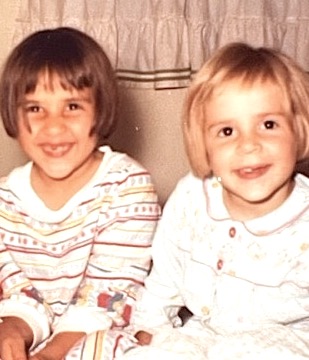
Once I had Peggy on the phone, she tried to explain to me what was happening, but kept referring to me in the third person, even though she knew it was me on the phone. I thought that was very weird. Where was that coming from? (Much later on, Liz suggested that Peggy may have been mixing me up with a new memory care staffer named Lily, whose coloring and hair are a little like mine. Could that explain this really weird conversation?) At the time, though, it remained a mystery. Eventually I was able to get Peggy calmed down, which was a relief to everyone. Whew.
But it was obvious that Peggy’s medications were no longer doing the job at this point. She needed something more, or she needed something different. So I got in touch with her geriatric psychiatrist Dr. Phan as soon as I could. Since house calls and virtual visits were both off the table, I had no choice but to schedule another in-person appointment for Peggy. Luckily, I was able to set this up for just a few days later and, though it was getting harder and harder to get Peggy into and out of the car, she somehow made it through without too much additional drama.
Then on March 1, Dr. Phan and I met over an 8 a.m. phone call to go over her latest diagnosis for Peggy. Ugh. I have never been a morning person. Anything happening at that early of an hour is a nightmare for me. At least I had a strong cup of my morning Assam tea by my side. Since Peggy was worsening almost every day, I wanted to make sure I was wide awake for that call.
The news was big. Dr. Phan explained that, as Peggy’s Alzheimer’s progresses, she’s developing what is known as Parkinson’s Pisa Syndrome. It’s not true Parkinson’s, but a mimic. The name is so apt though—my sister’s tilted posture did resemble the leaning tower of Pisa. The disease progression can cause this and, as I learned on ALZConnected, anti-psychotics can cause it, too.

It’s another one of those situations that happens so often with Alzheimer’s, where you are presented with a bad choice and a worse choice. On the one hand, if your person with dementia (PwD) doesn’t take anti-psychotics, they may become aggressive and combative, and those behaviors could possibly get them kicked out of memory care. Yet if your PwD does take anti-psychotics, they can develop Parkinson’s Pisa Syndrome, and with that comes a huge fall risk.
So there were no good options, as usual. The only way I thought to cope with this new information was to head out to the gym right after my meeting with Dr. Plan. And I had a good boxing day! I was able to punch out my stress and frustrations, which helped balance the rest of my afternoon, in which I alternated between more planning and scheduling on Peggy’s behalf and talking to her on the phone. It was nearly a full dementia day. At the end, I was worn out, but still took a moment to touch base with Peggy’s best friend Michael. He continued to amaze me. He saw her every other day, without fail (except on those rare occasions when he was out of town). I don’t know how he did it! Visiting a PwD so often incurs a mental and emotional cost—yet there he was, steadfast. Peggy was so lucky to have him as her friend, and I was lucky to have him as a confident. He clued me in to some of the latest and greatest unsettling experiences with Peggy. He told me:
She was very emotional today. Crying, argumentative, angry, some actual yelling. Her speech was continuous, but hardly anything I understood. She did speak a lot about you and Les and that you both were there yesterday and had brought Chloe to visit with her. She says she has seen Chloe every day. Most of the rest were conversations I either could not hear, or did not understand.
Later on, Michael shared some more about what went down this month. He explained:
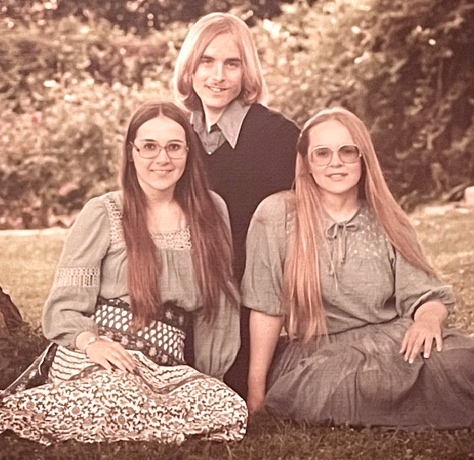
Peggy calmed down a lot and lay on the bed. I am certain she was exhausted from the trauma. But in that position, as you can imagine, she stares up at the ’70s picture of you three by the tree. I believe that that is how she is seeing you and Les all the time. We even talked about that. In the calm state, she actually apologized to me and said she was not mad at me. I told her that I knew she was not mad at me, that I was not mad at her, and that she was just having a difficult morning.
However, she knew enough afterwards to realize that her behavior was extreme enough to apologize for, which is a great sign (I feel). Peggy is still there, but just finding it harder to communicate. She also kept saying she wanted to go home, and was tired “of this.” I know that she is really fighting for herself as hard as she can. You have to appreciate her willpower.
And then I understood what Liz had been telling me about Peggy’s possible confusion between me and new memory care staffer Lily. Lily is in her early 20s, and that’s about how old I was when the portrait of the three of us was taken, the portrait Michael was talking about. (I must add: that photo was taken in the early ’80s, not the ’70s—let’s not make me any older than I already am!)
And I understood a little bit more about the burden Peggy was carrying through her illness. In his book On Pluto, investigative reporter Greg O’Brien (who also has early-onset Alzheimer’s) describes how grueling it is to hold it together when you have that diagnosis. So yeah, I could totally believe how tired my sister was “of this,” as Michael explained it. On Team Peggy, all of us were completely, totally spent. We were all tired—but the most exhausted of all of us was Peggy.