
[TIMELINE: July–August 2022]
Heading into July, I was emotionally worn out. Any one of the things that had happened in June was not a big deal by itself, but there were so, so many of them that they added up to a larger-than-normal emotional burden for me. It was also becoming even more important for me to smile around Peggy, and make sure my voice was upbeat when I spoke to her. It was the opposite of what I felt, so that little piece of cognitive dissonance contributed to my stress.
Sometimes, I could not help but recall that legendary episode of The Twilight Zone in which an entire town is ruled over by an omnipotent boy who can read minds. He is so quick to magically punish (or disappear) anyone who displeases him or even thinks unhappy thoughts that all the people around him wear fake smiles and say happy things so as not to upset him.
Obviously my sister wasn’t going to banish me into a cornfield with her mind, but I was still afraid that if my body language didn’t conform to the pleasant and calm version of me that she was expecting that there would be some sort of fallout. I was always tense when I visited Peggy, outwardly as positive and upbeat as I could be but inwardly worried that if I looked or sounded upset she would sense it, and spiral into an epic meltdown. (I learned later that it was not uncommon for caregivers to refer to that character when revealing their fears.)

Another big issue for me was coming to terms with the fact that I began to feel like I was now responsible for a child I never wanted. I am child-free by choice because I never wished to take on that much responsibility over another human’s life. Well, the joke was on me because that’s exactly what happened, when all I ever wanted was to be a childless cat lady, or maybe an eccentric aunt. When I connected with Peggy’s friends during this time, I imagined the conversations we were having must be similar to when you’re a parent and you meet up with other parents and discuss your kids. It was something I never expected to experience.
Sigh. “This is just a rough patch,” I told myself. I was sure I’d bounce back, but being confronted with all these negative feelings brought on even more negative feelings, like guilt. I worried that I was whining too much to anyone who would listen, and that’s probably because I was! I was exhausted and could no longer hide it. At some point—maybe even at this point—you will reach the same totally overwhelmed place that I did. My advice for you is: There are times when venting is absolutely appropriate. This will be one of those times.
Fortunately, my sister had the most wonderful friends, and they provided a lot of emotional support. And not only were they were a critical lifeline for me, they were that for Peggy, too. They all cared so much about her and were 100% there for her. They never let her down. She was unlucky to get that Alzheimer’s diagnosis, but she hit the jackpot in the friend department! I was glad I was able to spend some time with each of them during her illness.

I talked with Peggy’s lifetime friend Dodie (who lives in southern California) maybe three times a week. We would compare notes on how Peggy was doing, and how we were doing. She’s intuitive, so she was able to see things that I might have missed. She knew Peggy so well! She and my sister had been friends since they met in kindergarten, but Dodie and I established our own relationship as adults, and I’m so grateful for that. And I’m glad she’s still in my life now.
Peggy’s other bestie, Michael, kept in touch by email, and we would also see him a lot when we came down to visit. Sometimes he even offered up his house for us to stay in while we were in town. He and Peggy had been great friends ever since junior college, where they first worked on theater sets together. I had known him very casually over the years, but it wasn’t until Peggy was in memory care that he and I really became friends. We still talk frequently.
Caregiving, on every level, can be so draining and frustrating. You have to figure out a way to blow off steam and care for yourself. And if you can, find people who can be part of your team!
It also helps to check out written resources from people with direct knowledge, as those are loaded with helpful tips. I found a great one: Wendy Mitchell’s second book, What I Wish People Knew About Dementia: From Someone Who Knows. In one section, she explains that if you wear too much black around your face, you can look disembodied to someone who has dementia. “That’s no good,” I thought. I’m a goth and I own a lot of black clothing—but once I read that, I stopped wearing it to memory care. The last thing I wanted to do was scare people with dementia! I realized that, from now on, I would have to be myself on my own time.

So a few “normal” pastel shirts became my new go-to outfits to wear to memory care. The staff (and Peggy) would always tell me I looked nice. I’d smile and thank them, but on the inside I would cringe. Those clothes are all in my giveaway pile now, but at the time they were like a uniform for me when visiting Peggy. Turns out, it was the same for Michael! He would always wear the same few outfits. His personal “uniform” was designed around both utility—-cargo pants with lots of pockets for scissors, nail files, needle & thread, and so on—-as well as familiarity, so he always appeared similar to Peggy every time he visited her.
Some days in July were better than others. Even though the month started out a bit emotionally rough for me, apparently daily life for Peggy was still pretty good. Rebecca, who directed activities in memory care, told me that my sister had been doing really well. She said Peggy had enjoyed going on a “scenic drive” (where they take residents in the facility’s little van on a route through a quiet and beautiful park), working out with a yoga teacher, and tie-dying some shirts, all in the same week! I couldn’t quite picture my sister doing yoga, but I was thrilled she gave it a try. The thought of Peggy and yoga definitely put a smile on my face.
However, when I talked to Peggy on the phone right after that, she had no recollection of any of the fun things she had done that week (or even earlier that day). I asked if she had a good day and she said, “yes,” but she couldn’t remember any details. Dodie had a similar conversation with her—she had asked Peggy what she had been doing recently, and Peggy said, “Nothing.” Ha! Nothing? After a week of activities? At least I knew she had a good time in the moment.

Another issue that surfaced in July was the fact that, as Peggy was progressing in her disease, obviously her friends in memory care were, too. Of course, she didn’t realize this. Peggy could tell that some of her friends couldn’t communicate as well as they used to, but she interpreted this to mean that they didn’t like her anymore. Both Michael and I assured her that this wasn’t true, that those friends were just limited now in how they could interact. Peggy heard this and acknowledged it, but then she’d forget what we said shortly after the words were out of our mouths. And who knew if she even comprehended what we had told her?
At least Peggy’s room situation wasn’t causing her any distress anymore. She had gotten a new roommate, a sweet elderly woman named Margie. Margie always looked impeccable. She was always well dressed and wearing a bit of make-up, and her hair was always neatly styled. She had family members come to see her quite often who brought a lot of “extras” for her, and they would all spend time together in the common areas. It was great to see a resident’s family so present for them. I didn’t interact with her much, but Margie seemed to be a really nice person. Peggy liked her, and there were never any hostilities between them.
Even better, Peggy also had some other fully lucid friends from the assisted living side of the facility who continued to visit her in memory care from time to time, like the lovely woman in her 90s, Josephine, with whom she used to have cappuccino in the evenings, and Paul, the guy from down the hall whom she once fancied. I remember when Peggy first told me that these visits were happening, I wasn’t sure it was true—but then Rebecca backed her up. I was so happy to hear it and get confirmation! I know those visits meant so much to her.
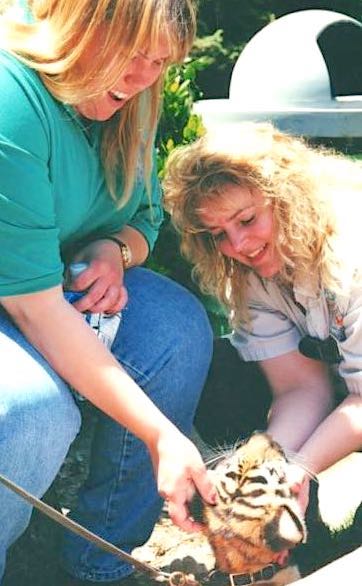
Then in mid-July, I had a great conversation with Peggy and she was quite lucid. No word salad, and minimal looping. While I was very careful not to say anything that might trigger a meltdown—such as “no cats are allowed in memory care,” which was definitely on my personal banned topics list—we were still able to have a good conversation. It was so good, in fact, that we stayed on the phone for an hour before I realized how much time had gone by! It had been months since that happened. At the time, I made sure to enjoy it, since I knew my sister’s clarity wouldn’t, and couldn’t, last. But it existed in that moment, and I savored it.
In late July, I had a session with my therapist Katy, and I relayed to her that I had been having some success with her suggestion to bundle bureaucratic tasks for Peggy into specific days of the week. That had allowed me to take some days off and have more time to rest, which was sorely needed. I was also able to spread out my visits to Peggy so they weren’t as disruptive to my schedule. Katy was happy I had made some progress, and so was I.
Unfortunately, August brought some additional stressors. Peggy had gotten very loopy again in conversation, and the loops came fast and furious. The most common one was a doozy: She wanted a cat and she wanted to go back to Sicily and she wanted her own house. Repeat. And repeat again. It was quite difficult to redirect her once she got into that particular loop.

Making matters even worse, Peggy was convinced that there were cats living in memory care, and it made her upset that she couldn’t have one of her own. That was one topic I never wanted to discuss with her. Of course, there weren’t actually any cats there, but she would say to me over the phone, “I’m looking at this cat right now!” I had no idea what she meant. Every once in a while during a visit, I had spotted a neighborhood cat somewhere on the grounds of the facility. Did she see one of those cats outside? Or was she imagining it altogether?
It wasn’t until my next visit that I figured it out—there were at least three cat-sized dogs roaming about. Sometimes visitors to memory care or even staff would bring in their dogs for the day. I knew Peggy’s visual perception wasn’t that great, so I’m sure she had been seeing all those visiting little dogs and her mind just screamed “cats!” to her. She just loved cats so much and missed being able to interact with them. The facility sometimes brought in a large, older, well-trained therapy dog for the residents to pet, but it wasn’t the same. What a shame the facility offered no program with a local shelter so memory care residents could cuddle with kittens or older cats! I regret that I didn’t have the time to arrange it myself.